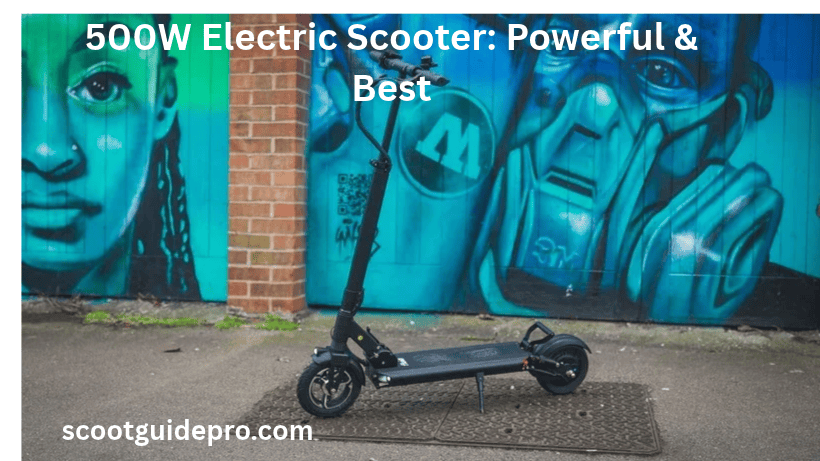
What Is a 500W Electric Scooter?
A 500W Electric Scooter is a stand-up 500W Electric Scooter whose hub motor is rated at 500 watts of continuous power. It sits in the middle of the market: stronger than entry-level 250W to 350W models, lighter and cheaper than 1,000W machines.
The number on the box describes the motor, not the whole 500W Electric Scooter. Speed, range and hill-climbing also depend on battery voltage, battery capacity, the controller, tires and your weight.
In short: a 500W Electric Scooter typically reaches about 20 to 28 mph (32 to 45 km/h), though many are limited well below that. It suits adult commuters on flat to moderately hilly routes who want more punch than a basic 500W Electric Scooter without the weight of a performance model.
What Does “500W” Actually Mean?
Two power figures matter, and sellers don’t always label them clearly.
- Nominal (continuous) power is what the motor can sustain without overheating. This is the honest number.
- Peak power is a short burst, often much higher. It affects launch feel, not everyday capability.
A 500W Electric Scooter advertised with a big peak figure can still have a modest nominal motor. When comparing models, look for the word “nominal” or “continuous” in the spec sheet.
Retail search results for “500w electric scooter” often mix in 350W and 1,000W models, so check the motor line on each listing before you trust the title.
How Fast Is a 500W Electric Scooter?
Most 500W Electric Scooter top out between roughly 20 and 28 mph (32 to 45 km/h) in good conditions. Plenty of models are capped lower, either by software or to meet local rules.
A European-market example from a Croatian brand caps its 500W continuous motor at 25 km/h by hardware limit, which is about 15.5 mph. The same motor on a US-market 500W Electric Scooter might be unlocked to go much faster.
What shifts your real top speed:
- Battery voltage (48V packs generally allow higher speeds than 36V)
- Rider weight and wind
- Tire pressure
- Battery charge level, since speed drops as the pack empties
- Any speed limiter set in the app or firmware
How Far Can It Go? Range Explained
Range comes from the battery, not the motor. The key formula is simple:
Watt-hours (Wh) = Volts × Amp-hours (Ah)
A 48V 15Ah pack stores 720Wh. A bigger number means more energy on board.
Manufacturers publish “up to” ranges measured under ideal conditions: a light rider, flat ground, moderate speed. One 48V 15Ah scooter in our research claims up to 60 km. Treat claims like that as a best case.
Expect real-world range to be noticeably lower when you:
- Ride at top speed
- Climb hills
- Weigh more than the test rider
- Ride in cold weather, which temporarily reduces lithium-ion capacity
- Run low tire pressure
A practical rule: plan your daily trip to use well under the advertised range, so you are never relying on the last few percent of the battery.
Can a 500W Scooter Handle Hills?
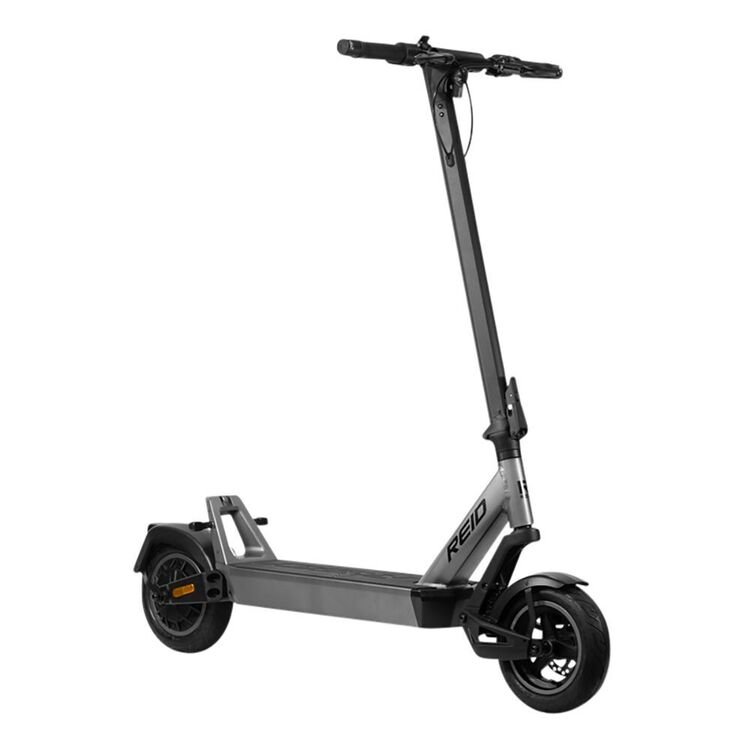
Yes, for moderate hills. Think of 500W as comfortable on gentle to moderate grades and slower on steep ones.
Some retail listings promise 20 to 30 percent slope climbing. That is rarely realistic for an average adult on a single 500W Electric Scooter motor, so treat those claims with caution.
| Situation | What to expect |
| Light rider, gentle hills | Comfortable, little speed loss |
| Average rider, moderate hills | Works well, slower uphill |
| Heavy rider, steep hills | Slow, strained, risk of overheating |
| Long steep climbs, any rider | Consider dual motors or higher power |
Battery health matters too. A tired or small battery sags under load, and the 500W Electric Scooter feels weaker on a climb than the motor rating suggests.
Is 500W Enough? Honest Verdicts by Rider Type
- Daily commuter, mixed terrain: Yes. This is the sweet spot.
- Student or office worker carrying it on transit: Often yes, but weight matters more than power. Check the folded weight.
- Heavy rider (over about 240 lb): Check the 500W Electric Scooter maximum load first. Most 500W scooters are rated around 220 lb, though a few heavier-duty models support far more, and those cost more.
- Steep-city rider: Probably not. Look at dual-motor 500W Electric Scooter.
- Short, flat last-mile trips: More than you need. A lighter 350W model may suit better.
350W vs 500W vs 1,000W
| Feature | 350W | 500W | 1,000W+ |
| Typical use | Short flat commutes | All-round commuting | Hills, performance, heavy riders |
| Hill ability | Gentle | Moderate | Strong |
| Weight | Lightest | Mid | Heaviest |
| Price tier | Budget | Mid | Upper |
| Legal in strict regions | Usually | Often | Often not |
The 500W Electric Scooter class wins on balance. Go lower for portability or strict local rules. Go higher if hills or load are your main problem.
Single Motor vs Dual Motor, and Scooter vs E-Bike
A dual-motor 500W Electric Scooter splits the work between two wheels. That helps on steep climbs and in wet conditions, but it adds weight, cost and battery drain.
An e-bike is worth a look if you ride long distances or want more stability. It often has clearer legal status in many countries. A 500W Electric Scooter wins on folded size and simplicity.
What to Look for Before You Buy
Use this checklist when comparing models:
- Nominal motor power stated clearly as 500W Electric Scooter
- Battery capacity in Wh, not just voltage
- Safety certification, such as UL 2272 for the 500W Electric Scooter and UL 2271 for the battery, or the CE or UKCA equivalent for your market
- IP rating for water resistance (IPX4 handles splashes; higher ratings such as IPX6 handle heavier spray)
- Brakes: hydraulic or good mechanical disc brakes plus an electronic brake
- Tires: tubeless pneumatic tires ride better than solid ones, and puncture-resistant options exist
- Suspension: helpful on rough pavement
- Folded weight: one budget 500W Electric Scooter in our research weighs around 40 lb, which is heavy to carry upstairs
- Maximum rider weight with a safety margin
- Warranty and service in your country
Red Flags: How to Spot Inflated Wattage Claims
- A listing quotes only peak power and never says nominal
- The motor rating changes between the title, the description and the spec table
- The claimed range sounds too good for the battery size (do the Wh math)
- No certification information at all
- Extremely low prices on a 500W Electric Scooter with a large battery, which can mean corners were cut on the pack
If the numbers don’t add up, move on.
Price Tiers: What You Get at Each Level
Prices vary by country, brand and season. Deal pricing in our research ranged from roughly $270 to $400 for budget 500W models, while premium models with better build quality and water resistance reached around $1,300.
| Tier | What you typically get |
| Budget | Basic 500W motor, smaller battery, simpler brakes, limited service |
| Mid-range | Larger battery, better brakes, app features, lights, clearer certifications |
| Premium | Higher load rating, stronger water resistance, suspension, better support |
Budget for extras too: a helmet, a good lock, spare tubes or sealant, and replacement tires.
Battery Safety and Fire Prevention
Lithium-ion batteries are safe when they are built well and used properly. Poor-quality packs are where most problems start.
- Buy scooters with recognized battery certification
- Use only the charger that came with the scooter
- Don’t charge unattended, on soft furnishings, or in an exit route
- Stop using a pack that swells, smells, or overheats
- Store the scooter at moderate temperatures
- Replace damaged batteries rather than repairing them yourself
Many apartment buildings and public transport systems now have rules about charging and carrying e-scooters, so check yours.
Laws and Rules by Country
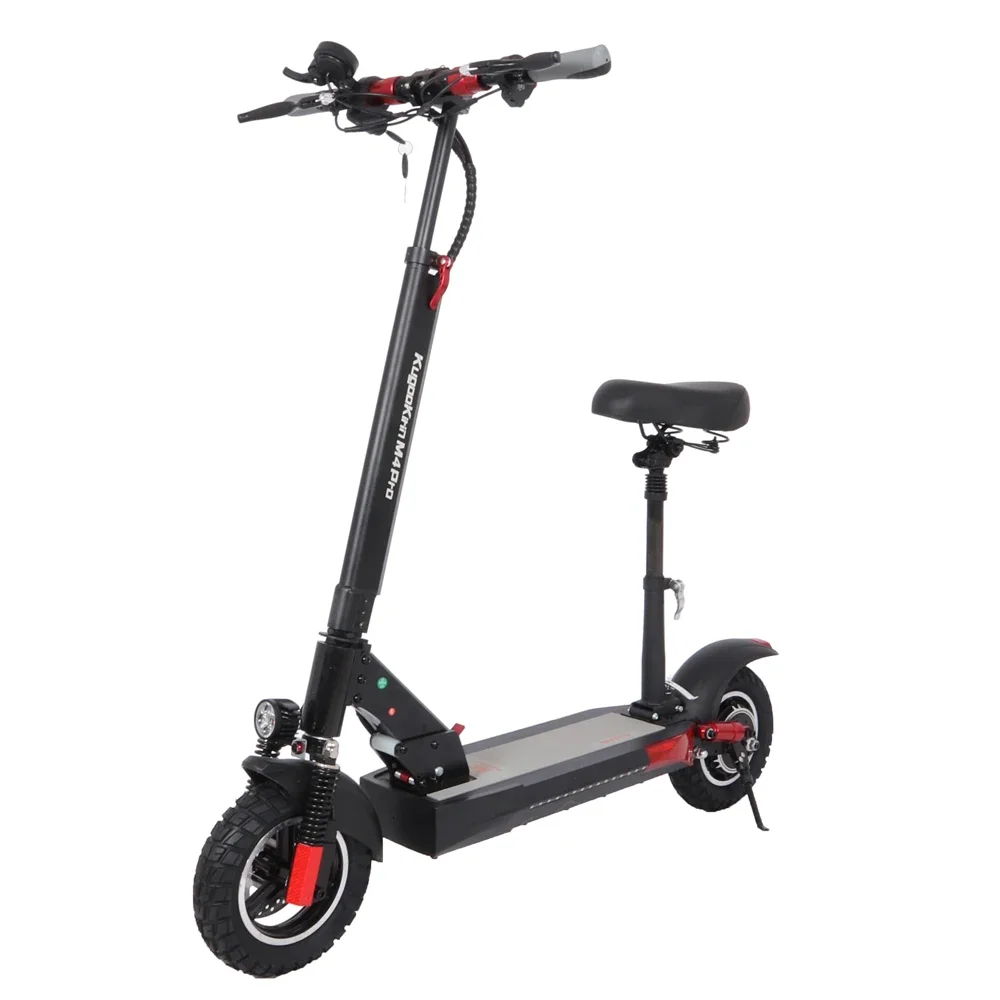
Scooter law changes often and differs between cities. Check your local authority before you ride. Here is the general picture.
United States: Rules are set mainly by states and cities. Speed caps, helmet requirements, age limits and where you may ride (road, bike lane or sidewalk) vary widely.
United Kingdom: Privately owned e-scooters are not legal on public roads, cycle lanes or pavements. They are allowed on private land with the owner’s permission. Only rental schemes in approved trial areas are legal on public roads.
Germany and the EU: Germany allows e-scooters under its eKFV regulation, with a speed limit of about 20 km/h, power limits, and mandatory insurance shown by a sticker. Other EU countries have their own rules.
Canada: Provinces and cities set the rules, and several run pilot programs with speed and power limits.
Australia: States and territories regulate e-scooters separately, commonly with speed caps around 25 km/h and power limits that differ by state.
UAE: Rules differ by emirate and are often tied to permitted areas, so check the local transport authority.
A scooter that exceeds the local power or speed limit may be treated as a motor vehicle, which can bring licensing, registration and insurance requirements, plus fines or seizure.
Rain, Cold and Real-World Conditions
- Rain: Look for a solid IP rating. Light spray is usually fine with IPX4 or higher, but avoid standing water, and wet roads lengthen braking distance.
- Cold: Batteries lose usable capacity in the cold. Store the scooter indoors and expect shorter range in winter.
- Heat: Leaving a scooter in a hot car can stress the battery.
Maintenance Basics
- Check tire pressure weekly
- Inspect brakes, cables and pads monthly
- Tighten the folding latch and bolts regularly
- Keep the battery in the middle of its range for daily use when practical
- Clean with a damp cloth, not a pressure washer
- Install firmware updates when the manufacturer releases them
For Fleets, Rental and Delivery Operators
Businesses choose differently from individual riders. Beyond the purchase price, think about:
- Durability: frame strength, tire type, and water resistance
- Serviceability: parts availability and repair turnaround
- Battery strategy: swappable packs reduce downtime
- Certification: compliance with local standards and insurance requirements
- Bulk pricing and warranty terms
- Total cost of ownership: purchase price plus batteries, tires, repairs and downtime
A cheaper scooter that spends half its life in the repair shop costs more than a sturdier one.
Quick Decision Guide
- Is your route mostly flat and short? A light 350W or lightweight 500W is enough.
- Do you face moderate hills? Choose a 500W with a 500 to 700Wh battery.
- Are you heavy or facing steep climbs? Look at dual-motor or higher-power models.
- Is your local law strict? Confirm speed and power limits first.
- Do you need to carry it? Prioritize weight over power.
Who Should Skip a 500W Scooter
Skip it if your route has long steep climbs and you are heavier than the rated load, if your local law prohibits your scooter’s power or speed, or if you only need a short flat hop and want the lightest possible option.
Frequently Asked Questions
1 How fast is a 500W electric scooter?
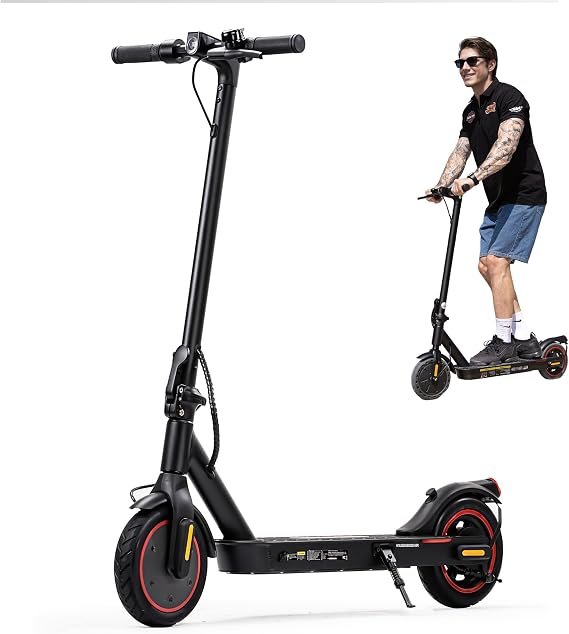
Typically about 20 to 28 mph (32 to 45 km/h), depending on voltage, rider weight and speed limiters. Many models are capped lower for legal reasons.
2 Is 500W enough for hills?
Yes for moderate hills, though speed drops on climbs. For long steep hills or heavier riders, a dual-motor or higher-power scooter is safer.
3 How far can a 500W scooter go on one charge?
It depends mostly on battery size. Advertised ranges of 20 to 40 miles or more are best-case figures, and real-world range is usually lower.
4 What is the difference between a 500W and 1,000W scooter?
A 1,000W scooter has more power for steep hills and faster acceleration, but it is heavier, costs more and is more likely to exceed local limits.
5 Is a 500W electric scooter legal?
It depends on where you ride. Some places limit speed rather than power, and some countries ban private scooters on public roads entirely. Check your local rules.
6 Can a 500W scooter carry a 250 lb rider?
Only if the specific model is rated for it. Many 500W scooters are rated around 220 lb, while some heavier-duty models support much more. Always check the maximum load.
7 How long does the battery last?
Batteries typically last several hundred charge cycles, which is often a few years of regular use with good care. Heat, deep discharges and rough handling shorten it.
8 Are 500W scooters waterproof?
No scooter is fully waterproof. Look for a stated IP rating, and avoid heavy rain and deep puddles unless the manufacturer says otherwise.
Conclusion
A 500W electric scooter is the practical middle ground for most adult riders. It handles everyday commutes and moderate hills, stays reasonably portable and often fits within local rules.
Before you buy, measure your route and its steepest hill, confirm your weight against the maximum load, check your local law, and compare battery capacity in watt-hours rather than headline wattage. Make sure the scooter carries recognized safety certification, and confirm that warranty and repair support exist in your country.
Do that, and a 500W scooter will usually be a sound, affordable way to get around.
These information about electric-scooter-with-seat Screen are gathered from different surveys, medical tests and tech giants like Techradar . Our top priority is to provide you valuable information about floor rising projector screens.
For More Details About Different Projectors Click Here