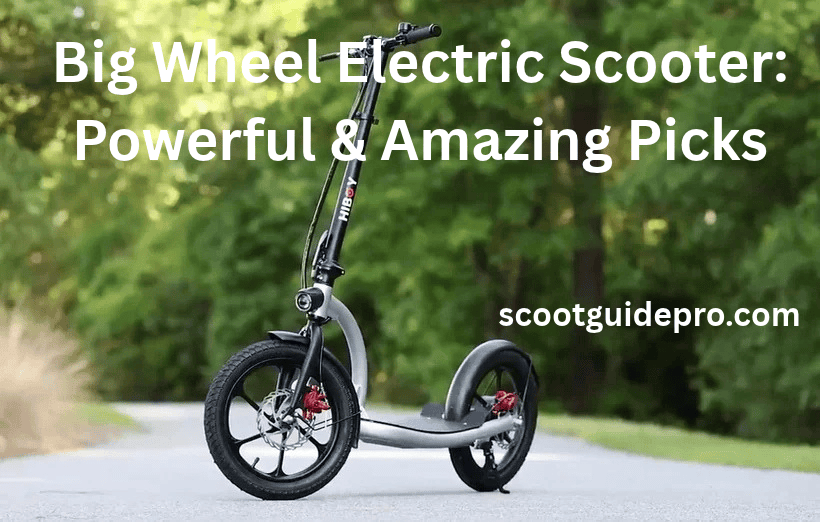
What Is a Big Wheel Electric Scooter?
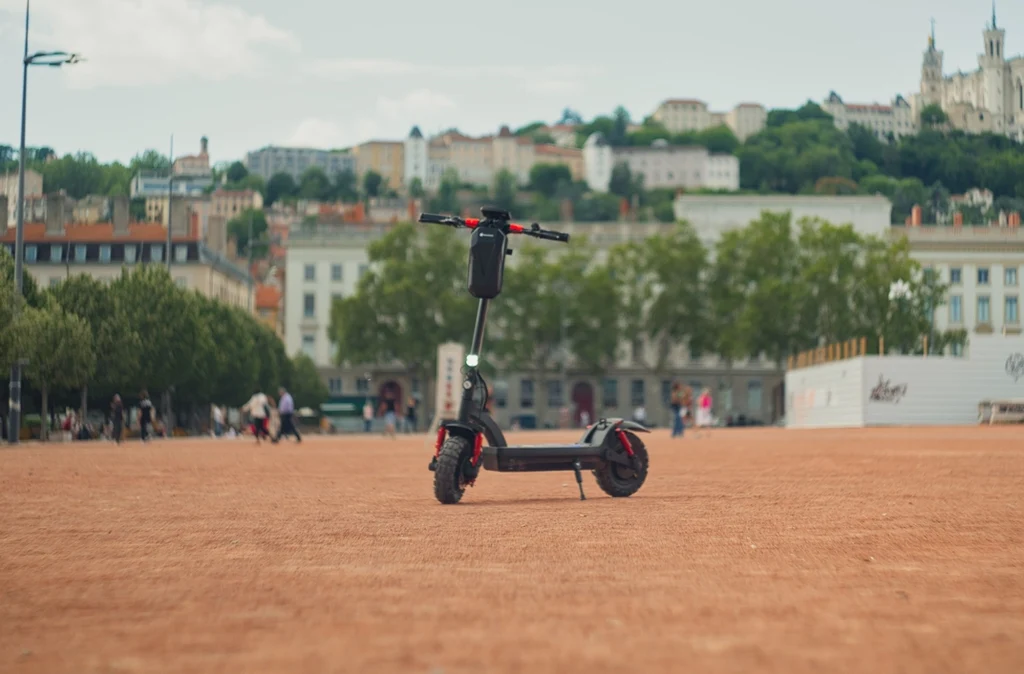
A big wheel electric scooter is an electric kick scooter with wheels of 10 inches or larger. The bigger wheels roll over cracks, potholes and curbs more smoothly, and they feel steadier at speed. The trade-offs are extra weight, a bulkier fold and usually a higher price.
You’ll see these Big Wheel Electric Scooter sold under other names too: large wheel, big tire, fat tire, all-terrain and off-road electric scooters. The labels overlap, but the idea is the same. The wheel is the first thing that separates a Big Wheel Electric Scooter that rattles your wrists from one that feels planted.
How Big Is “Big”? A Practical Size Guide
Brands and retailers don’t agree on where “big” starts. Some pages call 8.5 inches big, while others reserve the word for 11 inches and up. The tiers below are the most useful way to think about it.
| Wheel size | Common label | Typical use | Main trade-off |
|---|---|---|---|
| 6–8 inches | Small | Ultra-portable, short flat rides | Harsh over rough pavement |
| 8.5 inches | Compact commuter | Budget and entry-level city riding | Feels bumpy on cracks and potholes |
| 10 inches | Big wheel (mainstream) | Daily commuting, mixed city roads | Heavier and bulkier than 8.5 |
| 11–12 inches | Large wheel | Rough roads, heavier riders, light trails | Hard to carry; costs more |
| 12 inches and up | Off-road / hyperscooter | Dirt, gravel, steep hills, high speed | Heavy, large, not very portable |
For most readers, “big wheel” means 10 inches and above. That’s the line this guide follows.
Why Wheel Size Matters More Than You Expect
Wheel diameter affects almost everything about how a Big Wheel Electric Scooter rides. It changes comfort, grip, stability, braking feel and even how much of the Big Wheel Electric Scooter weight you notice when you lift it.
A larger wheel has a longer, more forgiving contact patch with the ground. More rubber on the road means more grip, which matters most when a car door opens or a pedestrian steps out and you have to brake hard.
Smoother Over Potholes, Cracks and Curbs
A small wheel drops into a pothole. A larger wheel rolls across it. What feels like a hard jolt on an 8.5-inch Big Wheel Electric Scooter often becomes a muted thump on a 10-inch or 11-inch model.
Riders who move up from 8-inch to 10-inch wheels often describe the change as night and day, especially on cracked sidewalks and patched asphalt. Taller wheels also help the deck clear curbs, so you’re less likely to scrape when moving between pavement and road.
Better Stability at Speed
Larger wheels hold momentum well and settle the Big Wheel Electric Scooter at higher speeds. They also help taller and heavier riders, who tend to find Big Wheel Electric Scooter twitchy. If you’re over roughly 200 pounds, wheel size is one of the first specs to check.
More Comfortable Long Rides
Big wheels work together with suspension. They soak up small vibrations, and the suspension handles the bigger hits. On a 30-minute commute this adds up to less fatigue in your hands, wrists and knees.
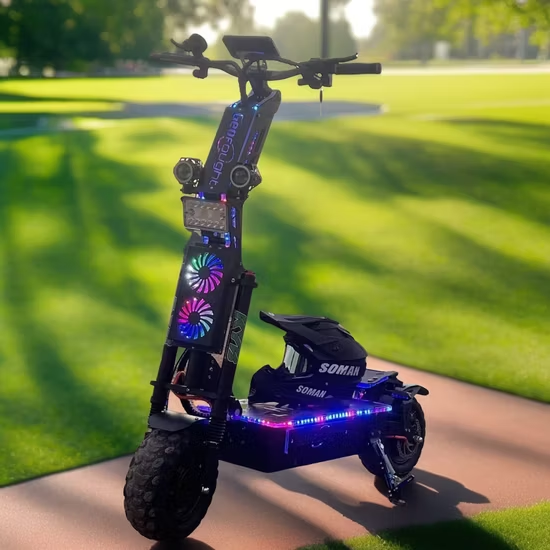
Big Wheel vs. Small Wheel: The Honest Comparison
Small wheels aren’t bad. They’re a different tool.
An 8.5-inch Big Wheel Electric Scooter usually accelerates a bit quicker because the wheels are lighter, and it folds smaller. A 10-inch Big Wheel Electric Scooter rides better and holds speed more efficiently, but it’s heavier and takes more room in a hallway or car boot.
| Factor | 8.5-inch | 10-inch | 11-inch and up |
|---|---|---|---|
| Ride comfort on rough roads | Fair | Good | Very good |
| Stability for heavier riders | Fair | Good | Very good |
| Acceleration feel | Quick | Moderate | Moderate |
| Portability and carrying | Best | Moderate | Hardest |
| Typical price tier | Lowest | Mid | Mid to high |
| Off-road ability | Poor | Limited | Best |
If you carry your Big Wheel Electric Scooter up stairs or onto a train every day, weight may matter more than ride quality. If you ride mostly on city streets and keep the Big Wheel Electric Scooter at street level or in a garage, the bigger wheel usually wins.
Tires: The Part Most Buyers Overlook
Wheel size gets the attention, but the tire decides how the wheel behaves.
Pneumatic, Tubeless and Solid Tires
- Pneumatic (air-filled) tires give the best cushioning and grip, but they can puncture.
- Tubeless, self-sealing tires are filled with a sealant that closes small punctures, so they’ve become a favorite on commuter Big Wheel Electric Scooter.
- Solid or honeycomb tires can’t go flat, but they ride harder and transmit more vibration.
For a daily commuter, tubeless or self-sealing pneumatic tires are usually the best balance. Solid tires make sense for fleets and shared Big Wheel Electric Scooter where flat repairs cost time and money.
Tread Pattern
Knobby, off-road tread grips loose dirt and gravel but adds road noise and can feel vague on smooth asphalt. A smoother, city-oriented tread suits commuting.
Suspension, Motor and Battery: What Big Wheels Need to Work Well
A big wheel alone doesn’t make a great Big Wheel Electric Scooter. It works best when the rest of the machine is designed around it.
Suspension. Big wheels cushion small bumps, but they can’t absorb every hit. Dual suspension, using springs, hydraulic dampers or rubber elements, improves comfort noticeably on poor roads.
Motor. Larger wheels need enough torque to move them, especially on hills. Check continuous wattage, not only the peak figure on the box. Dual-motor Big Wheel Electric Scooter climb steeper slopes more confidently, though they cost more and draw more power.
Battery and range. Range depends on battery capacity, rider weight, speed, terrain and temperature, so manufacturer claims are best-case numbers. Real-world range is often noticeably lower than the headline figure.
Deck and geometry. A Big Wheel Electric Scooter built for big wheels usually has a wider deck and longer, sturdier forks. That’s part of why the whole machine weighs more.
Never Retrofit Larger Wheels
It can be tempting to fit bigger wheels to a Big Wheel Electric Scooter you already own. Don’t. The frame, brakes, fork geometry and motor are engineered around one specific wheel diameter. Changing it can affect braking, clearance and stability in ways that are hard to predict, and it may void your warranty.
If you want bigger wheels, buy a Big Wheel Electric Scooter designed for them.
Who Should Buy a Big Wheel Electric Scooter?
A big wheel Big Wheel Electric Scooter is a good fit if you:
- Ride on cracked, patched or cobbled roads.
- Weigh more than the average rider or are tall.
- Commute longer distances and want less fatigue.
- Want some ability on gravel paths or light trails.
- Keep your Big Wheel Electric Scooter at ground level, in a garage or at a workplace.
Who Should Skip It
Be honest about your situation. A big wheel model may not be the right choice if you:
- Carry the Big Wheel Electric Scooter up several flights of stairs each day.
- Combine Big Wheel Electric Scooter and public transit and need a very compact fold.
- Ride only short, smooth, flat routes.
- Have strict storage limits, such as a tiny apartment or a car boot with little room.
In those cases, a well-built 8.5-inch Big Wheel Electric Scooter, or a lightweight folding model, may serve you better.
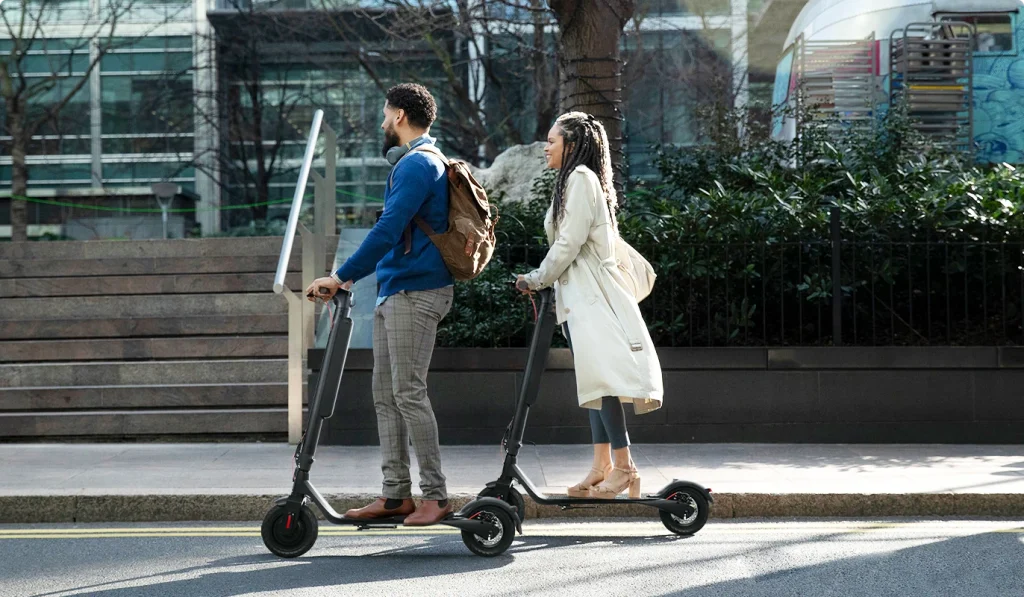
A Simple Decision Framework
Work through these four questions in order.
- How rough are your roads? Smooth and flat points toward 8.5 inches. Mixed or rough points toward 10 inches. Gravel or dirt points toward 11 inches and up.
- How heavy is the rider? Heavier riders gain more from larger wheels and stronger suspension. Always check the Big Wheel Electric Scooter maximum load rating.
- How often do you carry it? Frequent carrying favors a lighter Big Wheel Electric Scooter, even at the cost of some comfort.
- What’s your budget? Decide your ceiling first, then look for the best tire, suspension and brake package inside it.
Quick Scenarios
- City commuter, rough streets, scooter kept at work: a 10-inch Big Wheel Electric Scooter with tubeless tires and dual suspension.
- Heavier rider, long daily route: a 10 to 11-inch Big Wheel Electric Scooter with a strong motor, a wide deck and a high load rating.
- Weekend trail rider: an 11-inch-plus Big Wheel Electric Scooter with knobby tires, strong disc brakes and dual motors.
- Mixed commute with trains: consider an 8.5 to 10-inch model that folds compactly.
Popular Models and Brands to Know
The market changes quickly, so check current specs and prices before you buy. These names come up often in big-wheel conversations.
- Segway-Ninebot: the Max G2 is widely treated as a benchmark commuter with 10-inch self-healing tubeless tires. The Max G3 moves up to 11-inch tires, and the ZT3 Pro is aimed at rougher use.
- NAVEE: the GT3 Pro and ST3 Pro are known for dual suspension and 10-inch tubeless tires at competitive prices.
- NIU: the KQi series is popular for balanced commuting.
- Apollo: the Go, Pro and Phantom lines cover lightweight to performance riders.
- Kaabo: the Wolf King line sits in the performance and off-road end of the range.
- Gotrax, iScooter, Inokim and Levy: common names across budget, mid-range and commuter or fleet segments.
Treat any “best of” list, including this one, as a starting point. Prices, motors and tire specs get updated often, so confirm details with the manufacturer or a local dealer.
How Much Does a Big Wheel Electric Scooter Cost?
Pricing varies by country, taxes, tariffs and model year, so use these as rough ranges rather than quotes.
| Tier | Rough price range | What you typically get |
|---|---|---|
| Budget | Under about $500 | 8.5 to 10-inch wheels, basic suspension, modest range |
| Mid-range | About $500 to $1,500 | 10 to 11-inch tubeless tires, dual suspension, better brakes and range |
| Premium | About $1,500 and up | Dual motors, hydraulic suspension, 11-inch-plus tires, high speed |
Check current local prices before you decide. Cost also includes accessories such as a helmet, lock, spare parts and any servicing.
Safety, Rules and Compliance
A faster, more stable scooter doesn’t change the law. Rules differ by country, state and city, so check local regulations before you ride.
Speed Limits and Standards by Region
- European Union: the EN 17128 standard covers personal light electric vehicles, with a design speed of up to 25 km/h. Scooters sold in the EU carry CE marking, and national rules on age, helmets and speed still vary.
- Ireland: riders must be 16 or older and keep to a 20 km/h limit.
- United Kingdom: private e-scooter use on public roads is generally restricted outside approved rental schemes. UKCA marking applies for products placed on the market there. Check current rules before riding.
- Canada: provinces set their own rules, and a limit of around 24 km/h is common.
- United States: rules are set by states and cities. UL 2272 is the common electrical safety certification. It isn’t a federal requirement, but many retailers and fleet buyers ask for it.
- Australia: regulation varies by state, so check your local authority.
Wear a Helmet, Always
Big wheel scooters often go faster and weigh more, so crashes can be more serious. A certified helmet is the minimum. Many riders also add gloves and eye protection.
Wet-Weather Riding
Look for an IP rating. IP54 handles light rain and splashes, while IP65 or higher is better for regular wet-weather commuting. Even with a good rating, avoid deep puddles and don’t pressure-wash the scooter.
Maintenance and Parts
A heavier scooter works its tires, brakes and bearings harder. A little routine care prevents most problems.
Weekly checks
- Look at tire pressure and tread.
- Test both brakes before you ride.
- Check the folding mechanism and handlebar for play.
- Make sure lights and the bell work.
Monthly checks
- Inspect brake pads or discs for wear.
- Check bolts and the stem for tightness.
- Clean the deck and wipe down connectors.
- Look over the cable routing.
For tubeless tires, top up sealant as the manufacturer suggests. For battery health, avoid leaving the scooter fully drained for long periods, and store it somewhere moderate in temperature.
Finding a Good Local Dealer or Repair Shop
Parts and service matter more on a heavier, higher-spec scooter. When you search for an electric scooter dealer or repair shop near you, look for:
- Brand authorization and warranty handling.
- Technicians experienced with battery safety.
- Clear access to spare tires, brake parts and chargers.
- A test ride option before you commit.
Independent e-mobility shops, big-box retailers and brand flagship stores each have strengths. Independent shops often provide the best hands-on service, while retailers may offer easier returns.
Big Wheel Scooters for Business Buyers
If you’re sourcing for a retail shop, rental operation or fleet, the decision changes.
- Wheel-size mix: many fleets stock mostly 10-inch scooters for riders and a smaller number of 8.5-inch models for tight storage.
- Tire choice: solid or self-sealing tires cut downtime from flats.
- Compliance paperwork: ask for CE and EN 17128 documentation for Europe, UKCA for the UK and UL 2272 evidence for the US. Don’t skip battery transport certification such as UN38.3.
- Service and parts: check the supplier’s spare-parts supply, warranty terms and repair support before you place a large order.
- Total cost of ownership: weigh purchase price against maintenance, tire replacement and expected lifespan.
Treat market-size claims and sweeping regulatory statements in supplier marketing with caution, and ask for primary documents.
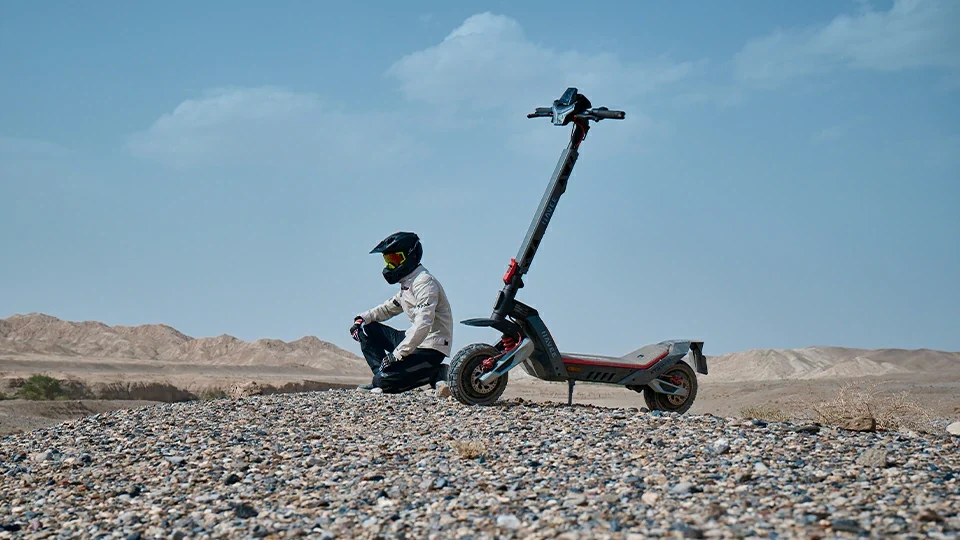
Common Mistakes to Avoid
- Buying on wheel size alone and ignoring weight and fold size.
- Trusting the headline range figure without allowing for real-world conditions.
- Choosing a scooter without checking the maximum rider weight.
- Skipping the helmet.
- Fitting bigger wheels to a scooter not designed for them.
- Ignoring local speed limits and rules.
- Forgetting about servicing and parts availability.
Alternatives Worth Considering
If a big wheel scooter doesn’t quite fit, these options might.
- 8.5-inch commuter scooter: lighter and cheaper, good for smooth, short routes.
- Lightweight folding scooter: best for mixed transit commutes.
- Seated electric scooter: more comfortable for riders who prefer sitting.
- Electric bike: better for longer distances and hills, with more storage options.
- Three-wheel scooter: extra balance for riders who want added stability.
Frequently Asked Questions
1 Are bigger wheels better on an electric scooter?
Generally yes, for comfort, grip and stability. Larger wheels roll over bumps more easily and feel steadier at speed. They also add weight, bulk and cost, so “better” depends on whether you value ride quality or portability more.
2 What is a big wheel scooter called?
You’ll see them called large wheel, big tire, fat tire, all-terrain or off-road electric scooters. Performance models with very large wheels and strong motors are often called hyperscooters.
3 What size wheels are best for an electric scooter?
For most adult commuters, 10 inches is the sweet spot between comfort and portability. Choose 8.5 inches if you carry the scooter often. Choose 11 inches or more if you ride rough roads, weigh more or want light off-road capability.
4 Is a 10-inch or 8.5-inch electric scooter better?
A 10-inch scooter usually rides more comfortably and feels more stable, especially on rough pavement. An 8.5-inch scooter tends to be lighter, more compact and a little quicker off the line. Pick based on your roads and how often you carry it.
5 Are big wheel scooters heavier?
Usually, yes. Larger wheels, wider decks, sturdier forks and bigger motors all add weight. If you lift your scooter often, compare listed weights and check the fold size.
6 Can I put bigger wheels on my electric scooter?
It’s not recommended. The frame, brakes, suspension geometry and motor are designed around one wheel size. Changing it can affect safety and handling and may void your warranty. Buy a model built for larger wheels instead.
7 Are fat tire scooters good for commuting?
They can be, especially on rough streets. They give a comfortable ride and good grip. The downsides are extra weight, road noise from aggressive tread and a larger footprint on trains or in small spaces.
8 Do big wheels use more battery?
They can, because larger wheels are heavier and need more torque to move. In practice, range depends more on battery capacity, rider weight, speed, terrain and temperature than on wheel size alone.
9 Are big wheel electric scooters better in wet weather?
Larger tires generally offer a bigger contact patch, which helps on uneven or wet surfaces. Wet-weather safety still depends on tire condition, brakes and the scooter’s IP rating, and on riding slower and braking earlier.
10 Do big wheel scooters need special certification?
Certification depends on where you live and buy. Europe uses CE marking and EN 17128, the UK uses UKCA, and the US commonly looks for UL 2272. Check your local rules and ask the seller for documentation.
Conclusion
A big wheel electric scooter is worth considering if you ride rough roads, weigh more, commute further or want a calmer, more stable ride. For most adults, 10 inches is the practical starting point, and 11 inches or more makes sense for heavier use or light off-road riding.
Before you buy, work through four steps:
- Check how rough your usual route is.
- Confirm the rider weight rating and the scooter’s real weight and fold size.
- Choose tubeless or self-sealing tires and decent suspension within your budget.
- Confirm local speed limits, age rules and safety certification, and find a dealer or repair shop you trust.
Get those four right and the wheel size will do what it’s meant to: make every ride smoother, safer and less tiring.
These information about electric-scooter-with-seat Screen are gathered from different surveys, medical tests and tech giants like Techradar . Our top priority is to provide you valuable information about floor rising projector screens.
For More Details About Different Projectors Click Here