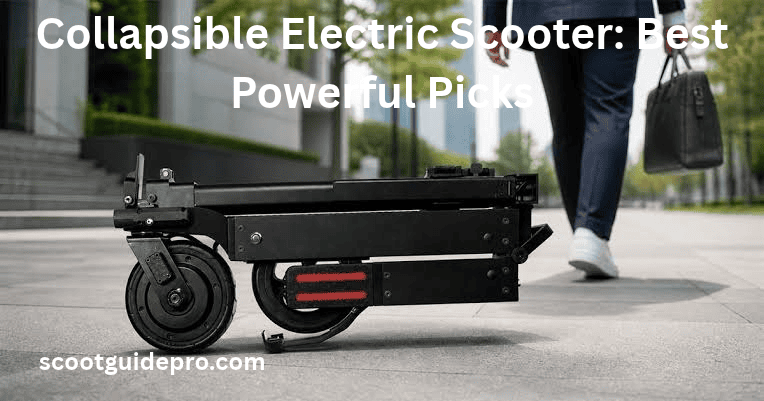
Collapsible Electric Scooter: How Folding Works, What It Costs and How to Choose
A Collapsible Electric Scooter is only useful if it comes with you. The fastest model on the shelf doesn’t help if it can’t get onto a train, up three flights of stairs or under a desk.
That’s the case for a collapsible electric scooter. The stem folds, the footprint shrinks, and a vehicle that would otherwise live in a garage fits into a hallway, a car trunk or the gap beside a bus seat.
But “collapsible” isn’t a single feature. Fold design, weight, latch quality, range and local rules all vary, and together they decide whether a Collapsible Electric Scooter feels convenient or turns into a chore. This guide walks through each one so you can choose with confidence.
What Is a Collapsible Electric Scooter?
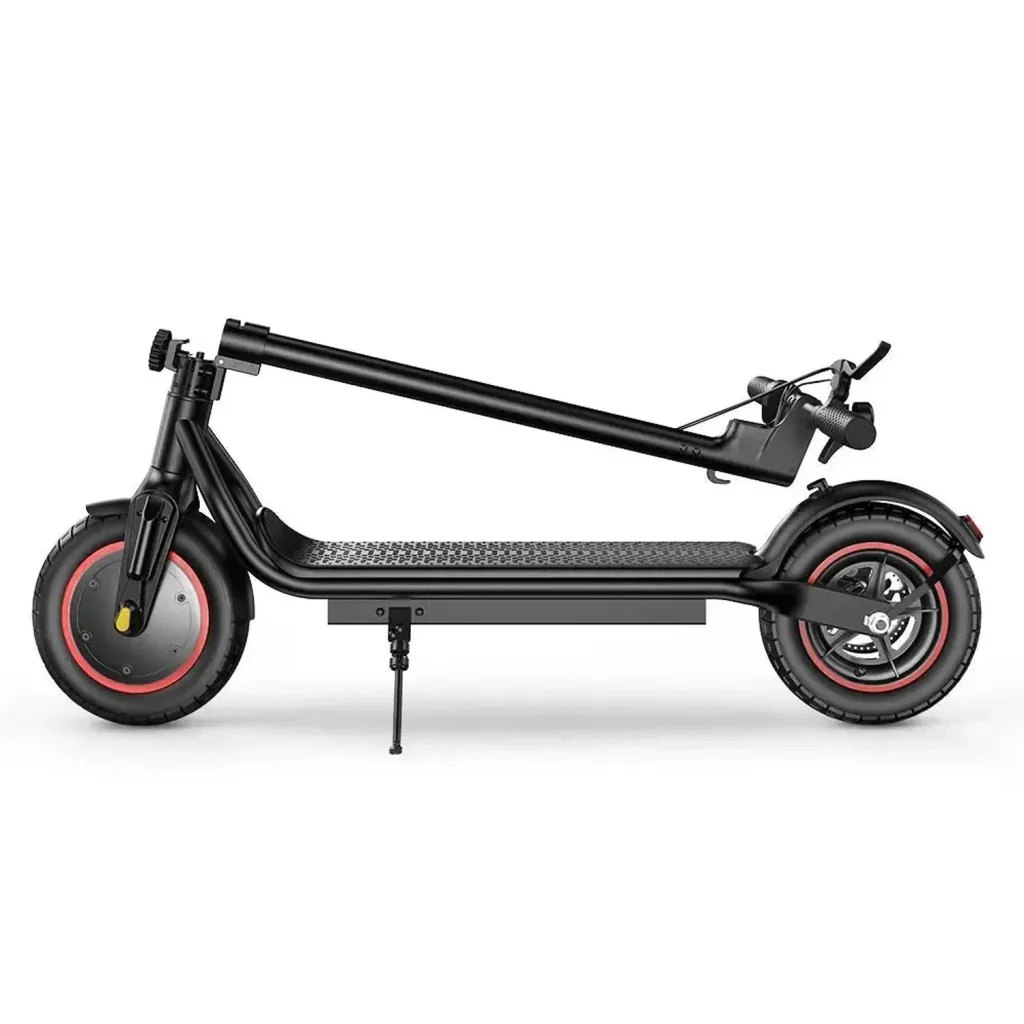
Short answer: A collapsible electric scooter is a battery-powered stand-up Collapsible Electric Scooter whose stem folds down toward the deck for carrying and storage. Most weigh 25 to 45 lbs and are built for commuting and last-mile trips.
You’ll also see the same product called a foldable Collapsible Electric Scooter, a folding Collapsible Electric Scooter or a portable electric scooter. The terms are interchangeable. They all describe a personal electric vehicle (PEV) with a hinge and latch that lets it collapse.
It belongs to the micromobility family, alongside e-bikes and shared dockless Collapsible Electric Scooter, and it’s designed for last-mile transportation: the stretch between a transit stop and your final destination.
Why Collapsibility Matters
Portability decides how many trips a Collapsible Electric Scooter actually replaces. A Collapsible Electric Scooter you can’t carry tends to stay at home.
Folding helps in several practical ways:
- Transit: Many bus, tram and rail systems allow folded Collapsible Electric Scooter, within their own rules.
- Small homes: It tucks into a closet, hallway or under a desk.
- Theft: Bringing it indoors is safer than locking it outside.
- Car trunks: Useful for park-and-ride or travel.
- Weather: Easier to keep dry and out of the cold.
Who Should Buy One (and Who Shouldn’t)
Short answer: Collapsible Electric Scooter suit transit commuters, apartment dwellers, students and travelers who carry their Collapsible Electric Scooter regularly. They’re a weaker fit for long suburban routes, rough roads or riders who can’t comfortably lift 30 to 40 lbs.
A good fit usually looks like:
- A mixed commute combining a Collapsible Electric Scooter with a train or bus
- A flat or apartment with limited storage
- An office where the Collapsible Electric Scooter can sit indoors
- Campus, travel or RV use
- Employer, campus or delivery programs that need compact, easy-to-store vehicles
A poor fit usually looks like:
- A long route where comfort matters more than carrying (a seated or fixed-frame model may serve better)
- Frequent rough pavement, potholes or cobblestones
- Riders who want exercise from their commute (an e-bike offers pedal assist)
- Cities that restrict Collapsible Electric Scooter on the planned route
How Does the Folding Mechanism Work?
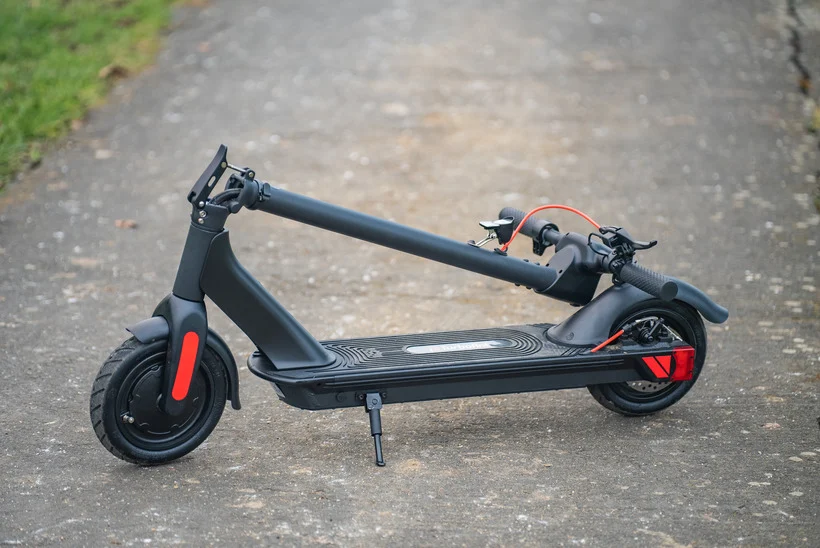
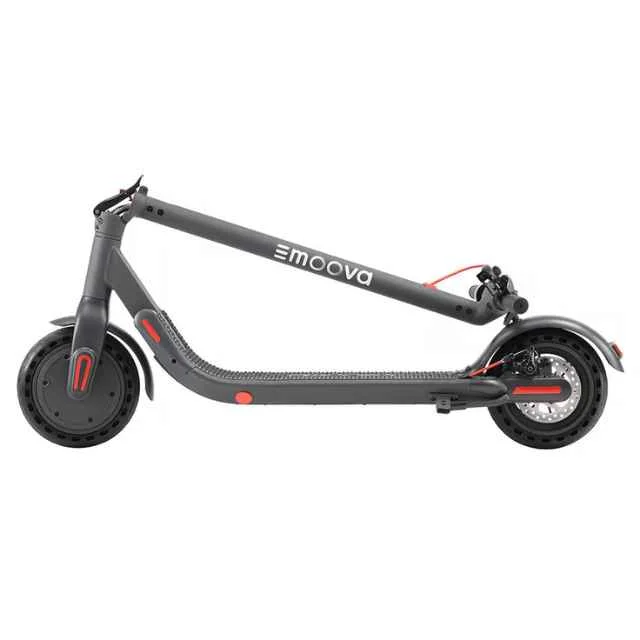
Short answer: Most Collapsible Electric Scooter fold at the base of the stem, where a hinge and latch lock it upright for riding. Releasing the latch lets the stem fold toward the deck, where it typically clips to a catch near the rear fender.
The folding joint is the Collapsible Electric Scooter main structural weak point. It carries your weight, your steering force and every bump in the road, so its quality matters more than a few extra miles of range.
How to fold a collapsible electric scooter
- Switch the scooter off and stand it on level ground.
- Release the safety lock or pin on the folding latch.
- Open the lever or clamp at the base of the stem.
- Fold the stem down until it meets the rear catch.
- Confirm it’s secured before you lift.
- Carry it by the stem or the recommended carrying point.
How to unfold it safely
- Release the rear catch and lift the stem upright.
- Close the main latch and engage any secondary lock.
- Wiggle the stem and handlebars to check for play.
- Test the brakes and throttle before riding.
Types of Folding Designs
| Design | How It Works | Best For | Watch Out For |
|---|---|---|---|
| Single-lever fold | One lever releases the stem | Fast transit folds | Stem play over time |
| Latch plus safety pin | Main latch with a secondary lock | Daily commuting | Slightly slower to fold |
| Folding handlebars | Bars fold in as well | Tight storage | More joints to maintain |
| Telescoping and folding | Height-adjustable stem that folds | Riders of different heights | More moving parts |
| Ultralight compact | Minimal frame and small battery | Short last-mile trips | Limited range and durability |
Weight Classes: What You’ll Actually Carry
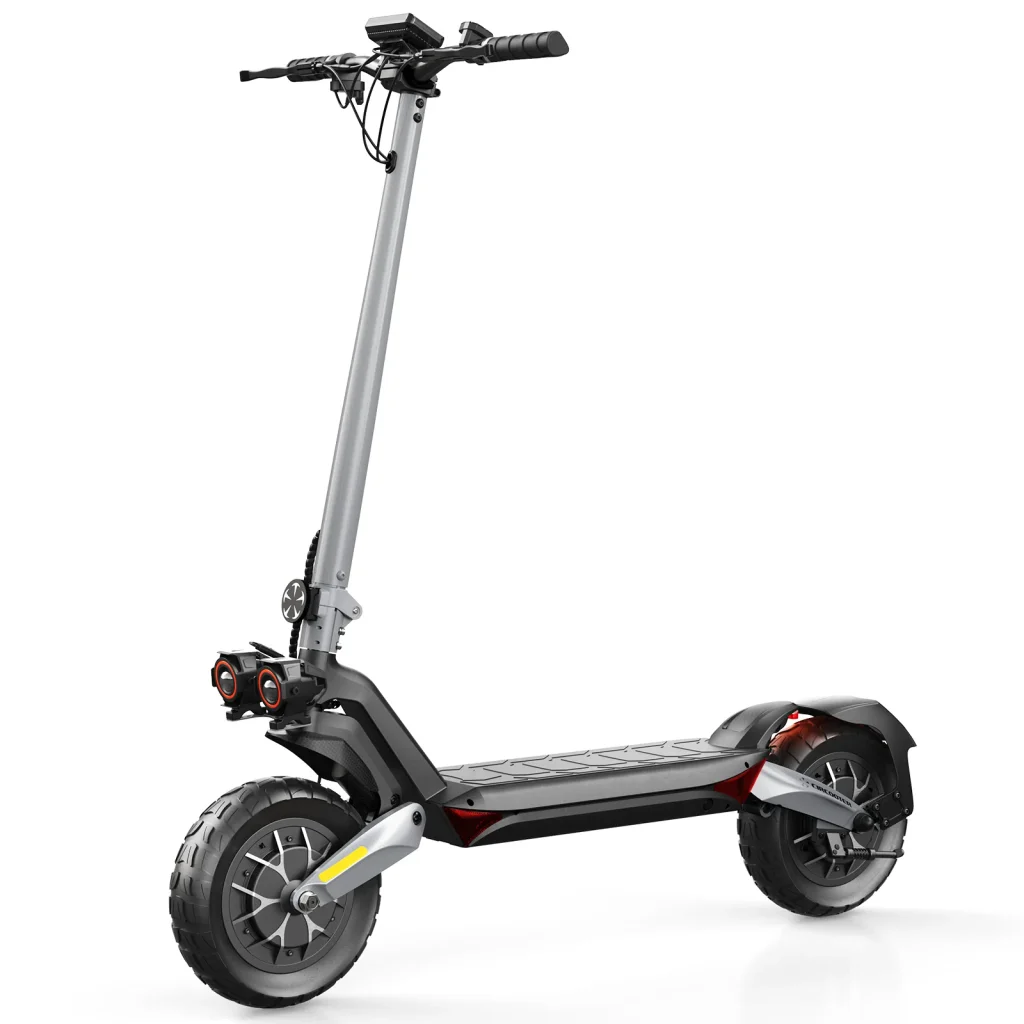
Weight is where “foldable” claims often disappoint. A Collapsible Electric Scooter may collapse neatly and still feel heavy after a day of carrying it.
| Weight Class | Typical Weight | Typical Claimed Range | Best For |
|---|---|---|---|
| Ultralight | Under 25 lbs | 8 to 15 miles | Short last-mile trips |
| Lightweight | 25 to 35 lbs | 12 to 25 miles | Transit commuters, stairs |
| Mid-weight | 35 to 45 lbs | 20 to 35 miles | Daily commuters who carry occasionally |
| Heavy-duty | 45 to 60+ lbs | 30 to 45+ miles | Longer routes, mostly rolled |
These are general industry ranges. Confirm figures with the manufacturer.
For stair commuters, aim for under about 35 lbs. If you only lift it into a car trunk now and then, 40 to 45 lbs is usually manageable.
Collapsible vs Fixed-Frame vs E-Bike
Short answer: Collapsible Electric Scooter win on portability and storage. Fixed-frame scooters are sturdier and often go further. E-bikes handle longer, rougher routes and offer optional exercise, but they’re heavier and harder to carry.
| Factor | Collapsible Scooter | Fixed-Frame Scooter | E-Bike |
|---|---|---|---|
| Portability | High | Low to medium | Low |
| Stability at speed | Medium | Medium to high | High |
| Typical claimed range | 15 to 40 miles | 20 to 50+ miles | 20 to 70 miles |
| Storage footprint | Small | Medium | Large |
| Rough-road comfort | Low to medium | Medium | High |
A folding e-bike sits in between: more comfortable and capable than a scooter, but usually heavier and pricier.
How to Choose a Collapsible Electric Scooter
Short answer: Start with how you’ll carry it, then match range, motor power, tires and fold quality to your route. Check local legality and transit rules before you buy.
Step 1: Decide how you’ll carry it
Stairs or trains every day point to lightweight models. Occasional lifting allows mid-weight. If you mostly roll it, a heavier long-range model works.
Step 2: Measure your route and adjust the range
Add up the round trip. Then plan with less than the advertised range. Claimed figures usually assume a lighter rider, flat ground, moderate speed and mild weather. Hills, wind, cold and heavier riders all reduce it.
For a rough comparison, look at battery capacity in watt-hours (Wh). More Wh generally means more range, though motor efficiency and riding style also matter.
Step 3: Match the motor to the terrain
Flat routes are fine with a modest motor. Hills call for more power, good torque and strong brakes.
Step 4: Test the fold
If you can, fold and unfold it in the shop. Look for a secondary lock, a solid latch and no wobble in the stem once it’s upright.
Step 5: Pick your tires
Pneumatic (air-filled) tires ride smoother and grip better but can puncture. Solid tires need little maintenance but feel harsher.
Step 6: Check rider capacity
Heavier riders lose range and put more stress on the folding joint. Leave a margin below the stated limit.
Step 7: Confirm local legality and transit rules
See the sections below. Do this before buying, not after.
Quick decision paths
- Train commuter: lightweight, fast fold, under 35 lbs
- Apartment dweller: compact fold and indoor-friendly storage
- Hilly city: stronger motor, dual brakes, mid-weight
- Longer suburban route: heavier long-range model, or a seated scooter or e-bike
- Campus or fleet: durable frame, serviceable latch, local repair support
What Does a Collapsible Electric Scooter Cost?
Short answer: Most collapsible electric scooters cost roughly $300 to $1,500 USD, with mid-range models commonly between $600 and $1,000. Prices vary by country, retailer and currency, so check local listings.
| Tier | Typical Price (USD) | What You Typically Get |
|---|---|---|
| Entry | $300 to $600 | Shorter range, simple fold, basic brakes |
| Mid-range | $600 to $1,000 | 20 to 30 miles claimed, better brakes, sturdier latch |
| Premium | $1,000 to $1,500+ | Larger battery, dual suspension, quality components |
The costs people overlook
- Battery replacement: Often the biggest long-term cost. Batteries lose capacity gradually over hundreds to a few thousand charge cycles, depending on quality, temperature and charging habits.
- Tires, brake pads and folding hardware: Regular wear items.
- Insurance or registration: Required in some regions, not others.
- Lock, helmet and lights: Budget for them from day one.
- Electricity: Small compared with fuel or fares.
To judge value, compare your current spend on transit fares, parking or rideshare with the scooter’s price plus a yearly allowance for upkeep. Use your own local prices.
Taking a Collapsible Scooter on Transit and Travel
This is the question competitors rarely answer, and it can make or break the purchase.
Short answer: Many transit operators allow folded scooters, but rules on size, weight, battery capacity and rush-hour carriage vary. Airlines usually restrict lithium batteries by watt-hour rating. Always check the operator’s own policy.
How to check transit and travel rules
- Search the transit operator’s website for “scooter,” “micromobility” or “personal electric vehicle.”
- Note any limits on folded dimensions, weight and battery size.
- Check for time restrictions, such as rush-hour bans.
- For flights, look up the airline’s lithium battery policy and your battery’s watt-hour rating.
- If the policy is unclear, contact the operator before you travel.
Many regions also publish dangerous-goods guidance for lithium batteries, which applies to air and sometimes rail travel.
Are Collapsible Electric Scooters Legal?
Short answer: It depends on where you live. Rules on speed, age, helmets, registration and where you can ride differ by country, state and city. Check your local transport authority before you buy.
There’s no single global rule. Common patterns include:
- Classification by power and speed: Many regions use class-based systems.
- Speed caps: Often around 15 to 25 mph (about 25 to 40 km/h) where scooters are allowed in bike lanes.
- Helmet rules: Mandatory in some places and recommended everywhere.
- Age limits: Often 16 or older, but not always.
- Where you can ride: Roads, bike lanes and sidewalks are treated differently.
- Registration and insurance: Required for some classes.
How to check your local rules
- Find your national or city transport authority’s page on e-scooters.
- Note the maximum power and speed in the legal definition.
- Compare those limits with the scooter’s published specifications.
- Ask the seller whether the model is road-legal in your area.
- When in doubt, contact the authority directly.
A product being legal to sell doesn’t automatically make it legal to ride on public roads.
Safety, Standards and Battery Care
Short answer: Choose scooters with certified batteries and chargers, use only the manufacturer’s charger, charge on a non-flammable surface and never leave a damaged battery charging. Check the folding latch before every ride.
Lithium-ion battery fires are rare but serious, and they’re most often tied to damaged batteries, poor cells or uncertified chargers. Look for UL 2272, an electrical safety standard for personal e-mobility devices, or the equivalent in your region. In the EU, check for CE marking and conformity documents.
How to charge safely
- Switch the scooter off.
- Connect the charger to the scooter first, then to the wall outlet.
- Charge in a dry, ventilated area away from flammable items.
- Unplug when charging is complete.
- Never charge a damaged or swollen battery.
Water and weather
An IP rating tells you how well a scooter resists dust and water. It’s a guide to light-rain tolerance, not a waterproof guarantee. Avoid standing water and heavy rain.
Cold weather reduces battery range, so store and charge indoors where possible. In hot climates, keep the battery out of direct sun and parked vehicles.
Folding joint warning signs
Stop riding and have the scooter checked if you notice:
- Stem play or a wobble when upright
- A latch that feels loose or won’t fully close
- Clicking or movement at the hinge
- Visible wear or cracks near the joint
Maintenance Checklist
Weekly
- Check tire pressure and tread
- Test both brakes
- Check the latch and stem for play
Monthly
- Tighten bolts and hinge hardware
- Inspect cables and connectors
- Clean the deck and wheels
Seasonally
- Inspect the latch and secondary lock for wear
- Note any drop in range, which can signal battery aging
- Store the battery partly charged if unused for a long time
Common Mistakes to Avoid
- Choosing by top speed instead of weight, fold quality and range
- Trusting claimed range without adjusting for weight, hills and weather
- Underestimating how heavy it feels after a full day of carrying
- Skipping a test fold
- Buying before checking local laws and transit policy
- Ignoring stem wobble until it gets worse
- Using an uncertified charger
Pros and Cons at a Glance
| Pros | Cons |
|---|---|
| Easy to carry and store | Smaller batteries limit range |
| Fits transit, trunks and small homes | Folding joint is a wear point |
| Easier to keep safe indoors | Small wheels feel rough on bad roads |
| Often cheaper than seated or e-bike options | Lightweight frames can be less durable |
| Practical last-mile solution | Legal status varies by region |
For Fleets, Campuses and Employers
Collapsible scooters appeal to campus programs, delivery operators and employer commuter schemes because they’re easy to store and move. At scale, a few extra checks matter:
- Latch and hinge serviceability: Can they be inspected and replaced locally?
- Warranty and parts: Is coverage available in your region, and does it apply to commercial use?
- Insurance and liability: Confirm what your policy covers.
- Charging and storage: Plan safe battery charging and storage areas.
- Durability: Favor sturdy frames, quality brakes and replaceable parts.
Finding a Dealer or Test Fold Near You
Search for “collapsible electric scooter near me,” “folding electric scooter dealer in [your city]” or “folding scooter repair near me.” Independent e-mobility shops often let you test the fold and offer servicing. Large retailers and online brands can cost less but may offer less local support.
Ask about warranty coverage in your region, availability of replacement batteries and latches, and where repairs are done. Shared or rental scooters are also a low-risk way to test whether a folding scooter suits your routine.
Alternatives Worth Considering
- Fixed-frame electric scooters: sturdier and often longer-ranging
- Electric seated scooters: more comfort, heavier
- Folding e-bikes: better for longer or hillier routes
- Shared or rental scooters: try before you buy
- Public transit plus walking: no ownership costs
Frequently Asked Questions
1 What is a collapsible electric scooter?
It’s a battery-powered stand-up scooter whose stem folds down for carrying and storage. It’s mainly used for commuting and last-mile travel.
2 How much does a folding electric scooter weigh?
Most weigh about 25 to 45 lbs. Ultralight models are under 25 lbs, while long-range models can exceed 45 lbs.
3 How far can a foldable electric scooter go?
Many are advertised at about 15 to 40 miles, but real-world range is usually lower because of rider weight, hills, speed and temperature.
4 Are collapsible electric scooters safe?
They can be, if the folding latch is secure, the battery is certified, and you wear a helmet and follow local rules. Stem wobble is a warning sign to address immediately.
5 Can you take a folding electric scooter on a train, bus or plane?
Often on trains and buses when folded, but policies vary by operator. Airlines typically restrict lithium batteries by watt-hour rating, so check before you travel.
6 Do folding scooters wobble?
Well-built ones shouldn’t. Stem play usually points to a worn or poorly made latch and should be checked.
8 How much does a collapsible electric scooter cost?
Typically about $300 to $1,500 USD, with mid-range models commonly $600 to $1,000. Local prices and currency will vary.
9 Are collapsible scooters worth it?
For short to mid-range trips, transit commuting and small-space living, many riders find them worthwhile. For long or rough routes, a fixed-frame model or e-bike may suit better.
10 Is a collapsible electric scooter legal to ride?
It depends on local rules. Some places limit scooters to bike lanes, cap speeds or require licensing for faster models, so check your local authority.
11 How long does the battery last?
Usually several hundred to a few thousand charge cycles, depending on quality, use and care. Replacement is a major long-term cost.
Conclusion
A collapsible electric scooter solves a logistics problem: getting a motorized vehicle through trains, stairs and small homes. The trade-offs are smaller batteries, a folding joint that needs attention and rules that differ from place to place.
Before you buy, decide how you’ll carry it, adjust the advertised range down, test the fold and confirm both local laws and your transit operator’s policy. Choose certified batteries and a model with local repair support.
Get those few checks right and a collapsible scooter can turn the awkward last mile into the easiest part of your commute.
These information about electric-scooter-with-seat Screen are gathered from different surveys, medical tests and tech giants like Techradar . Our top priority is to provide you valuable information about floor rising projector screens.
For More Details About Different Projectors Click Here