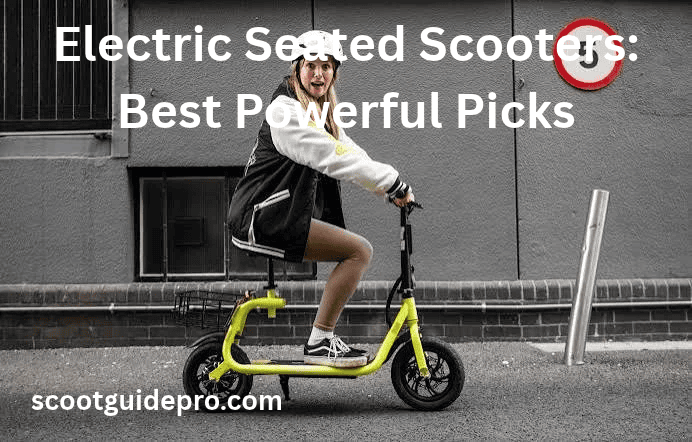
Electric Seated Scooters: Types, Costs, Legality and How to Choose One
Standing on a Electric Seated Scooters for twenty minutes is easy. Standing for fifty, in the rain, with a laptop bag on your shoulder, is a different story. That’s the gap electric seated scooters were built to fill: the compact footprint of a Electric Seated Scooters, with a saddle so the ride doesn’t wear you out.
They’re also one of the most misunderstood products in personal transport. Retailers call them Electric Seated Scooters, regulators sometimes call them mopeds, and shoppers mix them up with mobility Electric Seated Scooters. Getting that distinction wrong can mean buying something you can’t legally ride where you live.
This guide sorts it out. You’ll see what these Electric Seated Scooters are, who they suit, how to match one to your route, what they cost over time, and how to check the rules before you spend anything.
What Is an Electric Seated Scooter?
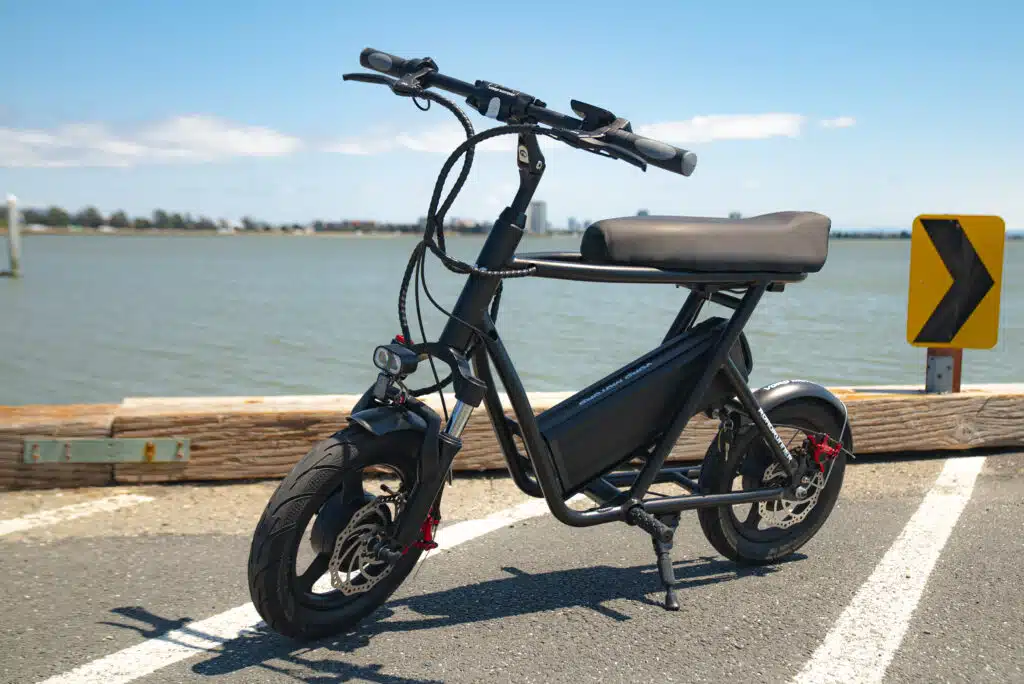
Short answer: An Electric Seated Scooters is a battery-powered Electric Seated Scooters with a saddle, footboard and handlebars, letting the rider sit instead of stand. It typically offers more comfort, stability and range than standing models, but weighs more and costs more.
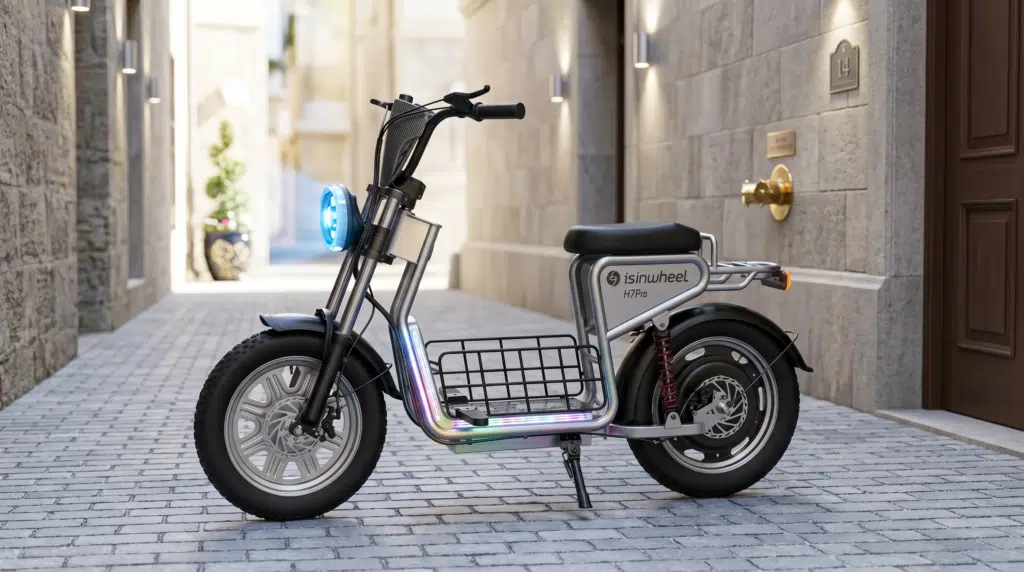
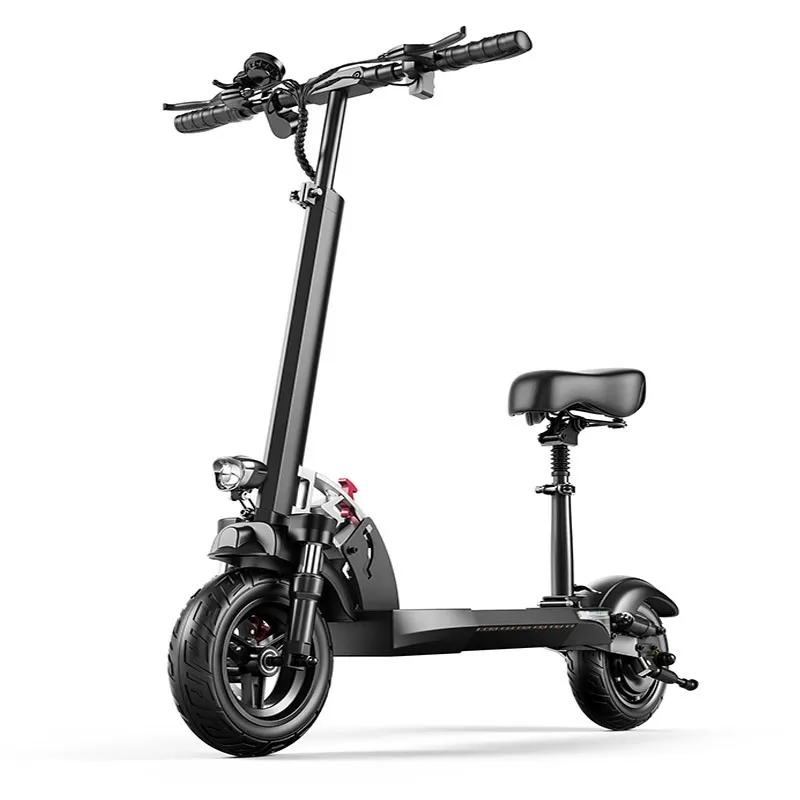
Most are built around a lithium-ion battery, a hub motor in the front or rear wheel, a controller, disc or drum brakes, and some form of suspension. You’ll also see them called sit-down Electric Seated Scooters, electric scooters with seats, or moped-style Electric Seated Scooters.
They belong to the wider micromobility family of personal electric vehicles (PEVs), alongside standing e-scooters, e-bikes and shared dockless Electric Seated Scooters. Their main job is the same as the others: moving people over short to medium distances, including the last mile between a transit stop and a destination.
Seated Scooter vs Mobility Scooter vs Electric Moped
This is the classification question that causes the most expensive mistakes, so it comes first.
Short answer: A seated electric scooter is built for commuting and leisure travel. A mobility Electric Seated Scooters is designed to help people with limited mobility get around, and an electric moped is a faster, often licensed road vehicle. Each is regulated differently.
| Factor | Seated E-Scooter | Mobility Scooter | Electric Moped |
|---|---|---|---|
| Main purpose | Commuting, leisure | Accessibility | Road transport |
| Typical speed | Low to moderate | Low | Moderate to high |
| Licensing and registration | Varies by region | Often exempt or separately regulated | Frequently required |
| Portability | Low to medium | Low | Low |
| Best for | Longer commutes, comfort | Everyday mobility support | Longer, faster road trips |
If you or someone you’re shopping for needs mobility support for medical reasons, speak to a healthcare professional before choosing. A certified mobility Electric Seated Scooters may suit that need better than a commuter model.
Who Are Seated Scooters For?
Short answer: Electric Seated Scooters suit riders with routes over about eight miles on fairly flat terrain, people who find standing tiring, and anyone with ground-level storage. They’re a weaker fit if you need to carry the Electric Seated Scooters up stairs or onto crowded trains.
A good fit usually looks like:
- A longer suburban or mixed commute where standing would get uncomfortable
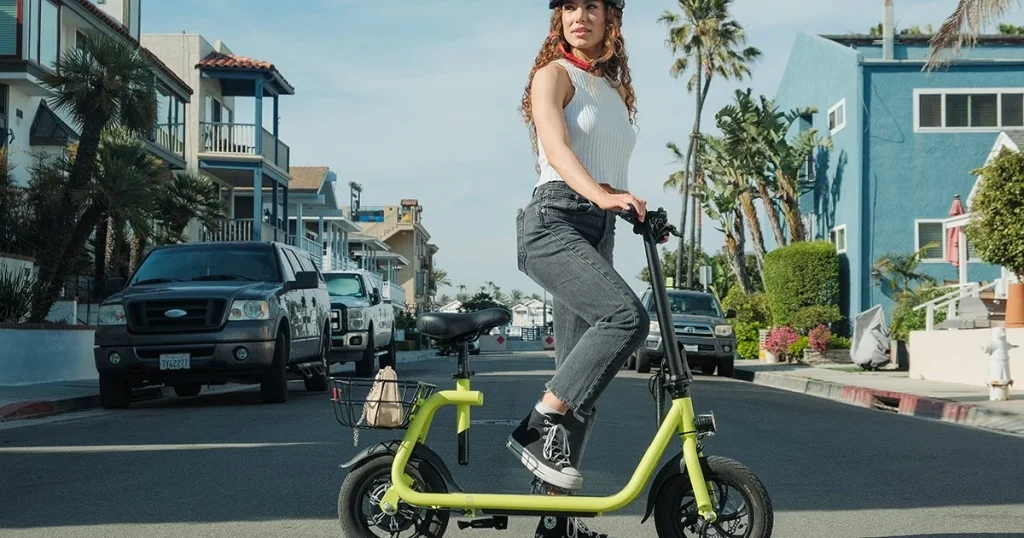
- A rider who wants to carry a bag or cargo on a rack or basket
- A campus, workplace or delivery operation that needs durable, comfortable vehicles
- Someone with a garage, hallway or ground-floor storage
A poor fit usually looks like:
- A fifth-floor walk-up with no lift
- Daily train commuters who fold and carry their transport
- Cities that ban or restrict seated models on public roads
- Riders who want exercise from their commute (an e-bike with pedal assist does that better)
Seated vs Standing Electric Scooters
Short answer: Electric Seated Scooters win on comfort, stability and range. Standing Electric Seated Scooters win on weight, price and portability. If you’ll carry it, choose standing. If you’ll ride it for long stretches, choose seated.
| Factor | Seated | Standing |
|---|---|---|
| Comfort on long rides | High | Low to medium |
| Weight | Typically 45 to 100+ lbs | Typically 25 to 45 lbs |
| Typical range | Often 25 to 60 miles claimed | Often 15 to 40 miles claimed |
| Price | Higher | Lower |
| Fits in a small flat | Rarely | Usually |
Seated Scooter vs E-Bike
Short answer: E-bikes handle longer distances and rougher roads and give optional exercise, while seated Electric Seated Scooters are simpler to ride and often easier to mount for people who can’t pedal comfortably. Choose based on distance, fitness and storage.
An e-bike makes sense when your route passes 15 miles, includes frequent hills, or when you want the choice to pedal. A Electric Seated Scooters makes more sense when you want a low step-through frame, a more relaxed posture and no pedaling effort at all. In some regions, Electric Seated Scooters also have clearer legal treatment, which is worth weighing.
Types of Electric Seated Scooters
Not every seated model serves the same rider. These are the main categories:
- Foldable seated scooters: A compromise design. They fold, but they’re heavier than standing foldables, so “portable” means a car trunk more than a train platform.
- Standard commuter models: The most common type, built around daily rides of 5 to 20 miles.
- Long-range models: Larger batteries (measured in watt-hours) and stronger motors for suburban or intercity routes.
- All-terrain models: Wider tires and stronger suspension for rough paths and light trails.
- Moped-style and three-wheel designs: More stable and cargo-friendly, but they may fall into a different legal class.
How to Choose a Seated Electric Scooter
Short answer: Start with your daily distance, then check terrain, storage, rider weight capacity, local legality and budget, in that order. Real-world range is usually lower than the advertised figure, so choose a model with a comfortable margin.
Step 1: Measure your real route
Add up the round trip. If you have no way to charge at your destination, you need to cover the whole distance on one charge.
Step 2: Adjust the range honestly
Manufacturers usually test range under ideal conditions: a lighter rider, flat ground, moderate speed and mild weather. Heavier riders, hills, headwinds, higher speeds and cold temperatures all reduce it. A useful planning habit is to assume you’ll get noticeably less than the headline number and pick a battery with spare capacity.
You can also compare batteries by capacity in watt-hours (Wh). More watt-hours generally means more range, though motor efficiency and riding style also matter.
Step 3: Match the motor to the terrain
Flat city routes are manageable with a modest motor. Steep or sustained hills call for higher power, good torque and strong brakes. Dual suspension helps on rough pavement.
Step 4: Be realistic about weight and storage
Check the Electric Seated Scooters weight, then picture yourself lifting it. If stairs are involved, weight matters more than top speed.
Step 5: Check rider weight capacity
Riders near the limit lose range, stress the motor and shorten component life. Leave a margin.
Step 6: Confirm the legal status
See the legal section below. Do this before you buy, not after.
Step 7: Set a budget that includes ownership costs
The sticker price is only part of it. Factor in a good lock, a helmet, lights and the eventual cost of a replacement battery.
What Do Electric Seated Scooters Cost?
Short answer: Most Electric Seated Scooters cost roughly $700 to $3,000 USD, with mid-range models commonly in the $1,200 to $2,000 range. Prices vary by country, retailer and currency, so check local listings.
| Tier | Typical Price (USD) | What You Typically Get |
|---|---|---|
| Entry | $700 to $1,200 | Shorter range, simpler suspension, smaller battery |
| Mid-range | $1,200 to $2,000 | Better brakes, dual suspension, longer range |
| Premium | $2,000 to $3,000+ | Large battery, stronger motor, higher-quality components |
The costs people forget
- Battery replacement: Usually the biggest long-term expense. Batteries lose capacity gradually over hundreds to a few thousand charge cycles, depending on quality, temperature and how you charge.
- Tires and brake pads: Regular wear items.
- Insurance and registration: Required in some regions, not others.
- Secure storage and locks: Theft is a genuine risk for any e-vehicle.
- Electricity: Small compared with fuel, but not zero.
A simple way to judge value: compare your current commuting spend (fuel, parking, transit fares or rideshare) against the Electric Seated Scooters purchase price plus a yearly allowance for upkeep. Use your local prices, because the answer varies widely between cities.
Are Electric Seated Scooters Legal?
Short answer: It depends on where you live. Some regions treat seated scooters like standing Electric Seated Scooters while others classify them as mopeds that need licensing, registration or insurance. Check your local transport authority before you buy.
There’s no single global rule, which is exactly why this gets people into trouble. Common patterns include:
- Classification by power and speed: Many regions use class-based systems. A model under certain limits may be treated as a light scooter, while a faster or stronger one is classed as a moped or motorcycle.
- Helmet rules: Mandatory in some places and strongly advised everywhere.
- Speed caps: Where scooters are allowed in bike lanes, limits are commonly set in the region of 15 to 25 mph (about 25 to 40 km/h), though this varies.
- Age limits: Often 16 or older, but not always.
- Where you can ride: Bike lanes, roads and sidewalks are treated very differently from one place to the next.
- Insurance: Required for some vehicle classes.
How to check your local rules
- Search your city or national transport authority’s website for “electric scooter” and “seated” or “moped” rules.
- Note the maximum power, top speed and any seating or pedal requirements in the definition.
- Compare those limits to the model’s published specifications.
- Ask the seller in writing whether the model is road-legal in your area.
- If it’s unclear, contact the local authority directly.
A product being legal to sell doesn’t automatically make it legal to ride on public roads.
Safety, Standards and Battery Care
Short answer: Buy models with certified batteries and chargers, use only the manufacturer’s charger, charge on a non-flammable surface, and avoid leaving a scooter charging unattended. Keep brakes, tires and lights in good condition.
Lithium-ion battery fires are rare, but they’re serious, and they’re most often linked to damaged batteries, poor-quality cells or uncertified chargers. Look for UL 2272, an electrical safety standard for personal e-mobility devices, or the equivalent certification in your region. In the European Union, check for CE marking and the relevant conformity documents.
How to charge safely
- Switch the scooter off.
- Connect the charger to the Electric Seated Scooters first, then to the wall outlet.
- Charge in a dry, ventilated area away from flammable items.
- Unplug when the charge is complete.
- Never charge a damaged or swollen battery.
Water resistance
An IP rating tells you how well a scooter resists dust and water. It’s a guide to light rain tolerance, not a waterproof guarantee. Avoid standing water and heavy rain even on rated models.
Weather and climate
- Cold: Batteries lose range at low temperatures. Store and charge indoors where possible.
- Wet: Braking distances grow on wet surfaces, and heavier seated scooters need more room to stop.
- Heat: Don’t leave a scooter or battery in direct sun or a hot vehicle.
Maintenance Checklist
Weekly
- Check tire pressure and look for wear
- Test both brakes
- Check lights and reflectors
Monthly
- Tighten bolts, stem and folding hinges
- Inspect cables and connectors
- Clean the frame and wheel area
Seasonally
- Inspect suspension
- Note any drop in range, which may signal battery aging
- If storing for a long time, keep the battery partially charged rather than full or empty
Common Mistakes to Avoid
- Choosing by top speed instead of range, braking and comfort
- Trusting the advertised range without adjusting for weight, hills and weather
- Skipping a test ride and finding the seat height or handlebar reach is wrong
- Buying before checking the legal class
- Forgetting how heavy the scooter is until it needs to go up a step
- Using a cheap, uncertified charger
- Leaving the scooter unlocked or locked to something weak
Pros and Cons at a Glance
| Pros | Cons |
|---|---|
| Comfortable on longer rides | Heavy and hard to carry |
| More range than most standing models | Higher purchase price |
| Stable and easy to balance | Legal status unclear in some regions |
| Room for bags or cargo | Needs more storage space |
| Easier for riders who struggle to stand | Little exercise benefit |
For Fleets, Campuses and Employers
Businesses are increasingly looking at seated scooters for delivery routes, campus travel and employer commuter programs. The comfort advantage helps with rider retention and fatigue, but a few extra checks matter at scale:
- Serviceability: Can local technicians repair it, and are parts easy to get?
- Warranty terms: Is coverage available in your region, and does it apply to commercial use?
- Insurance and liability: Confirm what your policy covers.
- Battery logistics: Plan for safe charging, storage and end-of-life recycling.
- Durability: Look for robust frames, quality brakes and swappable components.
Finding a Dealer or Test Ride Near You
If you want to try before you buy, search for “electric scooter with seat near me,” “electric scooter dealer in [your city],” or “electric scooter repair near me.” Independent e-mobility dealers often allow test rides and offer servicing. Large sporting-goods retailers and direct-to-consumer online brands can be cheaper but may offer less local support.
Whichever route you choose, ask about warranty coverage in your region, battery replacement options and where servicing is done. Rental or shared-scooter services can also be a low-risk way to test whether a seated or standing format suits your commute.
Alternatives Worth Considering
- Standing electric scooters: Lighter and cheaper if you carry it often
- E-bikes: Better for long distances and hills, with optional exercise
- Electric mopeds: Faster, but usually need licensing and insurance
- Mobility scooters: Designed for accessibility needs
- Public transit combined with walking or shared bikes: No ownership cost
Frequently Asked Questions
1 Are electric seated scooters legal?
It depends on your location. Some places treat them like standing e-scooters, others classify them as mopeds requiring licensing, registration or insurance. Check your local transport authority before buying.
2 Do you need a license to ride an electric scooter with a seat?
Not always. Lower-power, lower-speed models are often exempt, while more powerful or faster ones may require a license or registration. Rules differ by country, state and city.
3 How far can an electric seated scooter go on one charge?
Many are advertised at roughly 25 to 60 miles, but real-world range is usually lower because of rider weight, hills, speed and temperature. Choose a battery with spare capacity.
4 How much does an electric scooter with a seat cost?
Typically about $700 to $3,000 USD, with mid-range models commonly between $1,200 and $2,000. Local prices and currency will vary.
5 What’s the difference between an electric scooter and a mobility scooter?
Electric seated scooters are built for commuting and leisure travel, while mobility scooters are designed to assist people with limited mobility. They’re usually regulated differently.
6 Is a seated scooter better than a standing scooter?
It’s better for comfort, stability and longer rides, and worse for weight, price and portability. The right choice depends on whether you’ll ride it or carry it.
7 Can you ride an electric scooter with a seat in the rain?
Many have an IP rating for light rain, but heavy rain and standing water should be avoided. Braking distances are longer on wet roads, especially on heavier scooters.
8 How long does an electric seated scooter battery last?
Most lose capacity gradually over several hundred to a few thousand charge cycles, depending on quality, temperature and charging habits. Replacement is a significant long-term cost.
9 Can you fold an electric scooter with a seat?
Some models fold, but they’re usually heavier than standing foldables, so they suit car trunks better than daily train commutes.
Conclusion
Electric seated scooters are a strong choice for longer, comfort-focused commutes, riders who struggle to stand for long periods, and anyone with the storage space for a heavier vehicle. Their trade-offs are weight, cost and legal treatment that varies a great deal from place to place.
Before you buy, measure your real route, adjust the advertised range down, confirm the legal class where you live and look for certified batteries and local servicing. If you’re unsure, try a test ride or a rental first.
Get those few checks right and a seated scooter can turn a tiring commute into the most comfortable part of your day.
These information about electric-scooter-with-seat Screen are gathered from different surveys, medical tests and tech giants like Techradar . Our top priority is to provide you valuable information about floor rising projector screens.
For More Details About Different Projectors Click Here