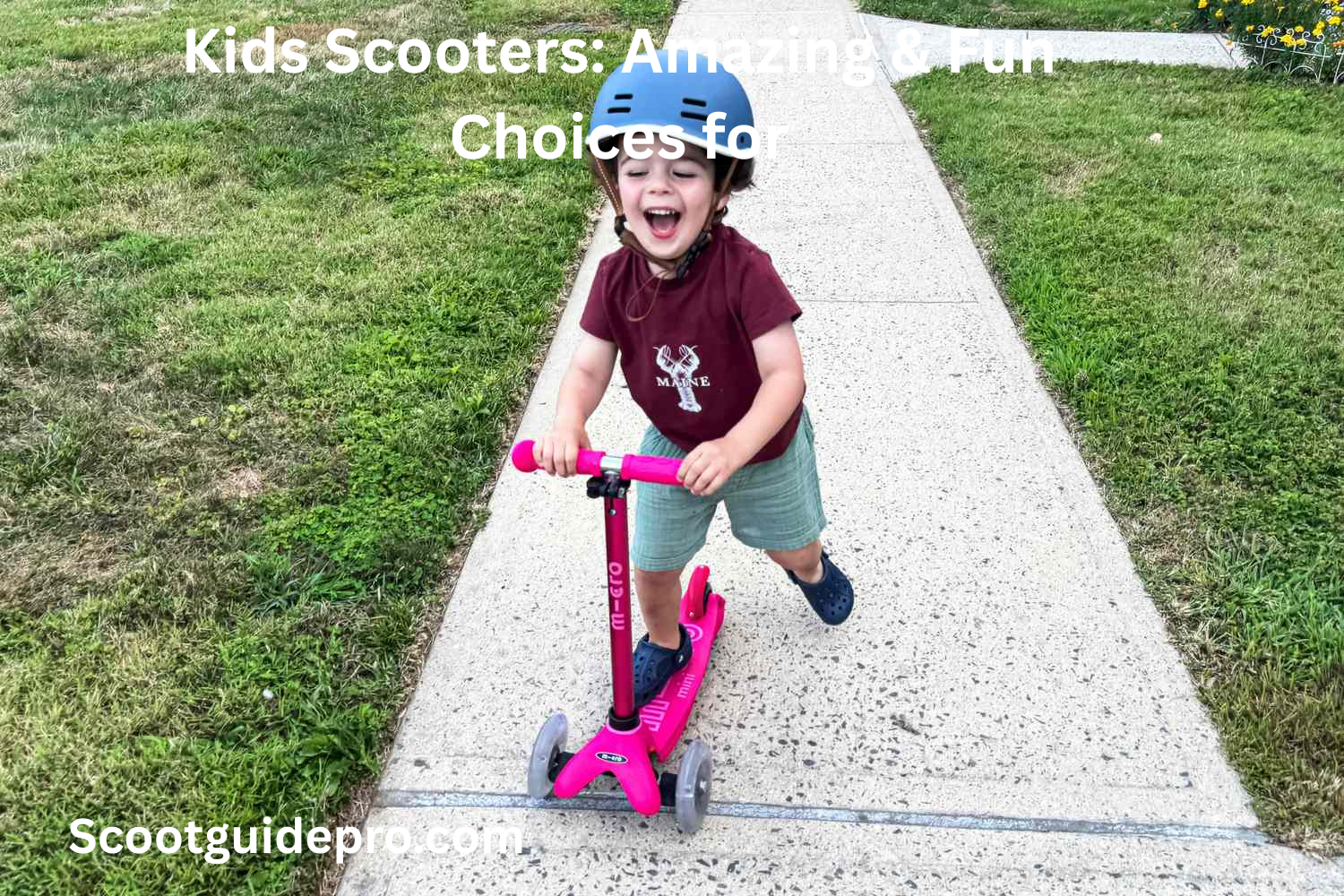
A Kids Scooters is a device that can be ridden, equipped with a deck, wheels, and a bar that children propel by pushing away from the ground using just the soles of their feet. There are a variety of options, from sturdy 3-wheel Kids Scooters for toddlers to light 2-wheelers, as well as battery-powered models designed for teenagers, typically for children between the ages of 2 and the preteen years.
What Exactly Is a Kids Scooter, and Why Does It Matter?
The basic components of Kids Scooters are easy to comprehend, consisting of an even, flat area (the deck) along with a set of wheels as well as the steering column, which is topped by the possibility of adjusting the handlebar or T-bar. What differentiates a quality one from a flimsy one will be the way in which these components can be matched with the kid who is riding the Kids Scooters.
Beyond fun, Kids Scooters play an important part in the early development of motor skills. Balancing, pushing off, as well as steering, all require the same coordination as well as weight-shifting capabilities that are later used to support biking. Many families find that Kids Scooters are the gateway between biking and walking and are a cheap maintenance option that gets youngsters moving around without the hassle of a parking lot full of equipment.
Kids Scooters also form a component of our daily routines as bikes do. Kids Scooters fold down small and are suitable for kids aged five to use on the pavement. They make a walk around the neighbourhood or going to school into something children look forward to.
What is a kid’s scooter designed for? Broadly, children between the ages of 2 and the early teens; however, the proper type is different for each age. The teenager and the young are not to do with what they desire from a bike.
Types of Kids Scooters (And Who Each One Suits)
Every Kids Scooters isn’t designed to be used only by one individual. The most famous types can be classed into
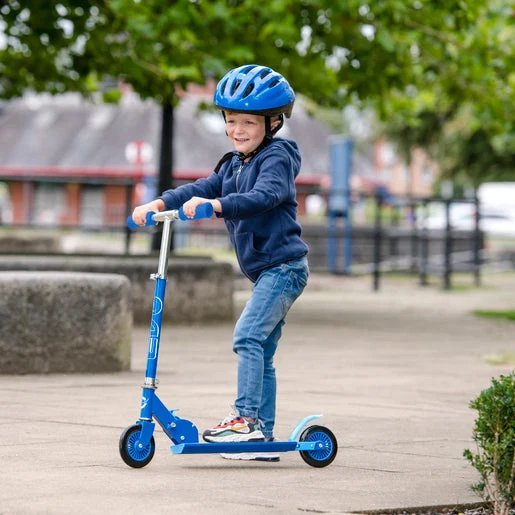
- Three-wheel (lean-to-steer)Kids Scooters It has two wheels on the front (or at the rear) in addition to another wheel in the rear.They are operated by leaning instead of moving the handlebar. They’re sturdy and safe which makes them the ideal option for toddlers and infants.
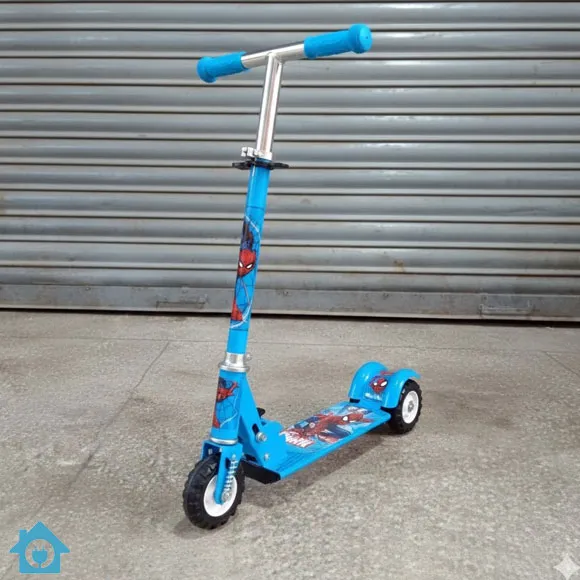
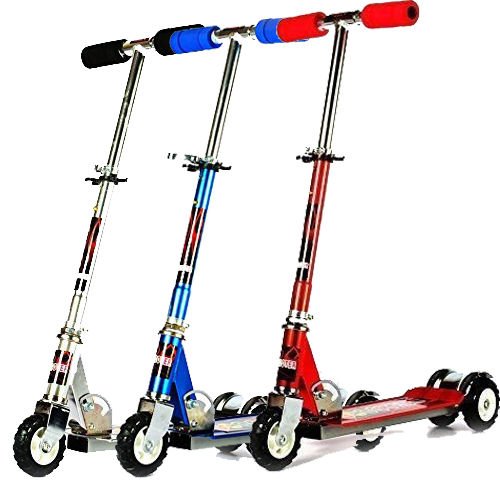
- 2-wheel Kids Scooters: They are lighter, portable, and more like what adults imagine whenever they hear “scooter.” More suitable for children who have a little ability to balance.
- Stunt Kids Scooters also referred to as Pro Kids Scooters built by a sturdy frame, which is non-folding and has an reinforced deck. They are made to endure the rigors of jumps, grinds as well as skate park use. The Kids Scooters are made for the more advanced, older riders.
- Electric Kids Scooters They are powered by batteries and controlled by electronic throttle.They require an entirely different level of expertise as Kids Scooters.. The speed, the distance to braking, and the time to react are more important in this.
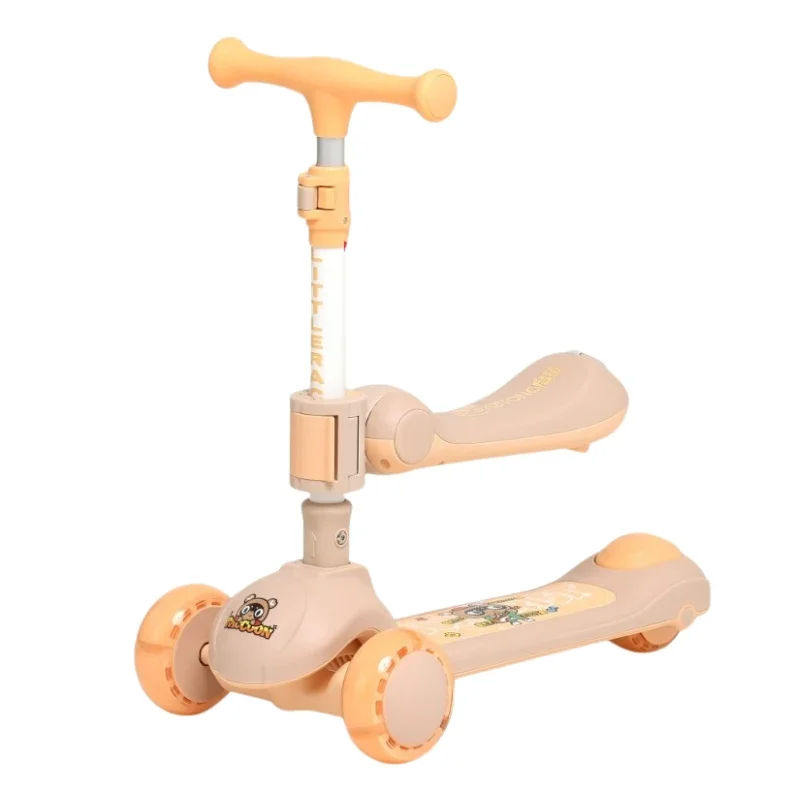
- Convertible or seated Kids Scooters are 3-wheel models that have a seat with an adjustable seat, intended for children riders (roughly 3 to 5 years old) who don’t have the confidence to stand up and walk.
- Off-road and all-terrain vehicles have larger, air-filled tires specifically designed for gravel, grass, and trails that are uneven, not the smooth surface of pavement.
| Type | Wheels | Best Suited For |
| 3-wheel / lean-to-steer | 3 | Ages 2–5, first-time riders |
| 2-wheel kick scooter | 2 | Ages 5–10, confident balance |
| Pro / stunt scooter | 2 | Ages 8+, skate parks and tricks |
| Electric scooter | 2 or 3 | Ages 8+, with close supervision |
| Seated / convertible | 3 | Ages 1–3, earliest riders |
| Off-road / all-terrain | 2–3 | Ages 6+, grass and trail riding |
The basic principle is that having More wheels means more security, and that’s why most guides point children towards 3-wheel models. The deck is reinforced, and fixed frames, on the contrary, distinguish a regular cruiser from models that are able to manage a skate park.
How to Size a Kids Scooter (Don’t Rely on Age Alone)
Age-based charts are a good beginning, but they’re not the entire information needed. Five-year-olds with different heights, balance levels, and confidence levels can vary widely in height, weight, and confidence, and an item that’s suitable for one may not work for the other. It’s a quick and practical check that an age-related chart does not.
A simple sizing check:
- The child should be placed flat-footed on a flat floor wearing the shoes that they’ll be wearing while on the road.
- The height of the handlebar should be checked -with the child holding this bar. It must rest roughly between the hips and the belly button. It should not be high above the chest or to the side of the thigh.
- Check the deck’s width. Your feet ought to rest comfortably on the deck, without forcing the foot into a narrow, awkward stance, which can lead to strain on your ankle over time.
- Verify the weight limit with the current weight and allow for some room instead of buying up to the max.
- Check the lean or turn (for 3-wheel models, ensure that your child is able to lean on the scooter and not tip over; in case of 2-wheel models, make sure they’re able to hold themselves still prior to pushing off.
To provide a rough guideline generally, the range of heights looks as follows:
Age Range Approx. Height Recommended Type
| Age Range | Height Range | Recommended Scooter Type |
| 2–5 years old | 30–36 in | Convertible 3-wheel with seat |
| 2–5 years old | 33–42 in | 3-wheel, lean-to-steer steering system |
| 5–8 years old | 40–50 in | Two-wheel kick scooter |
| 8–12 years old | 48–60 in | Pro scooter or more powerful 2-wheel |
| 12+ years old | 58+ in | Adult-sized or Pro-sized |
If a child falls in between classes, go down to more control, rather than up to allow for room to grow. Smaller bikes are simpler to handle than a huge Kids Scooters.
Safety Standards, Gear, and Rules Worth Knowing
The most common cause of falls-related injuries is the most often reported cause that children are hurt when riding their Kids Scooters.
Safety Standards, Gear, and Rules Worth Knowing
The most common cause of falls-related injuries is the most often reported cause when children get injured when riding their Kids Scooters.
Most of the risk can be averted by using the appropriate equipment as well as a little surveillance — and it’s not something that should be avoided for all Kids Scooters.
What do the safety standards actually cover:
- ASTM F2264 is the standard for non-powered Kids Scooters in the US, establishing requirements regarding the strength of handlebars and decks as well as braking efficiency and the lack of sharp edges or pinch points.
- ASTM F2641 includes electric and powered Kids Scooters as well as pocket bikes. It addresses speed limits, acceleration, and brakes under various circumstances.
- EN71 is the same toy safety standard that is used throughout the European Union, covering mechanical, physical, chemical, and flammability specifications.
- The UL 2272 specifically deals with the safety of electrical and battery fires for Kids Scooters it is a good thing to check prior to purchasing any electric model.
- CPSC is the US authority that enforces the standards and monitors injury information tied to products that are not compliant.
Simply put, Kids Scooters that have the certification are tested for the strength of their structure and for basic hazards, and are not just sold by the manufacturer as “safe.”
The most important safety equipment:
Helmet (multi-sport or bike helmet is ideal), wrist guards, knee pads and elbow pads, as well as closed-toe non-slip shoes, should all be worn, along with lights or reflective elements to allow riding at night are musts for success.
Rules to ride that are worth reinforcing:
- Monitor closely until your child is able to demonstrate consistent control.
- Make use of the pathways or sidewalks designated for your use instead of the roads.
- Beware of driving in parking areas as well as driveways and pedestrian walkways, which are jammed with cars.
- Avoid night rides unless your bike is equipped with adequate reflectors, lights, and reflective reflectors. Kids Scooters should be handled with attention.
The manufacturers often promote them as being safe for children at an early stage, however responses and understanding of risks for kids in the first age aren’t as good as adults would expect. The biggest leap usually occurs between the ages of 7 and 8. A few pediatric recommendations go even beyond that — agreement among experts in child safety tends toward more supervision, lower speeds, and autonomous use of throttle-controlled scooters rather than Kids Scooters. (Source: General pediatric safety guidelines).
There are changes in regulations. Many US states as well as other nations have tightened or introduced minimum-age regulations for Kids Scooters as well as Kids Scooters over the past year. Therefore, it’s worthwhile looking up the laws of your locality prior to making a purchase. What’s an impulse purchase on a Tuesday, within a particular region?
Pricing: What to Expect Across Types
Prices may vary depending on brands, products or regions. These broad prices (in USD; adjust for local currency and market) can be a useful beginning point
Type Typical Price Range
| Scooter Type | Price Range |
| 3-wheel scooter for toddlers | $25–$60 |
| 2-wheel kick scooter | 2-wheel kick scooter |
| Pro/stunt scooter | $80–$250 |
| Electric scooter (recreational/educational, ages 3+) | $120–$400 |
| Off-road scooter (ORV) | $200–$750 |
Source of retail market ranges for 2025-2026)
Shopping in person at a local toy store, sporting goods store, or bike shop may cost a little more than buying through the web, but it gives children a chance to test suitability before committing to a purchase. It’s a great option to get a Kids Scooters for the first time. Shops for specialty Kids Scooters and skates are usually the best option for models that are pro-stunt and repair parts. Marketplaces online and manufacturers’ websites generally have the most extensive range of products and the most convenient pricing comparisons, but the shipping time and availability of stock differ by location.
Common Mistakes Parents Make
- Buying “for growth. “An oversized scooter is much more challenging — and risky for an infant to handle than one that’s properly proportioned.
- Considering helmets as an optional item. It shouldn’t be, no matter how easy the experience is.
- Insisting on limits on the amount of weight, in particular in electric cars, because it impacts braking and battery performance.
- Beginners can start with a pros motorbike. The rigid deck and narrow stance make early learning difficult and not advanced.
- Do not skip local law checks before purchasing an electric vehicle.
- Overlooking the material of the wheel. Hard plastic wheels appear uneven and slow on real road surfaces, compared to polyurethane that absorbs shock much more effectively.
Bearings and Wheels: A Quick Translation
Specifications for wheels may sound more complex than they actually need to. But, in actual fact:
- The tire is made of polyurethane (PU) tire are more grippy and are able to roll faster than rubber tires.. They don’t need to be filled with air like a tire.
- The bearing grade (often called ILQ as well as ABEC) influences how smoothly the wheel turns. The bearings of lower quality are more likely to wear out quicker, especially in humid environments, which can cause more drag as well as a bumpier ride over time.
- The dimension of the wheels is an exchange. On the whole, smaller wheels are more agile while riding on smooth surfaces. However, bigger wheels are more able to roll over small cracks, bumps or uneven road.It’s not necessary to be memorized prior to buying the product. It’s important to know why a bike is noticeably smoother in comparison to another model at the same cost.
Maintenance That Actually Extends a Scooter’s Life
- Check and tighten the clamp that folds, as well as the bolt on the handlebar, at least once every two weeks throughout the use of your bike.
- Look over the wheel to find signs of wear. Replace it when the tread begins to fall.
- Apply a small amount of lubricant to joints regularly to stop the joints from rusting and squeaking.
- If you have an electric model, stay clear of leaving the battery completely exhausted for lengthy periods, and keep it out of extreme cold or heat.
- Dry the deck following the wet weather ride to prevent slips and rust.
Alternatives Worth Considering
The scooter isn’t the sole choice for developing the foundation for mobility and balance:
- Balance bicycles fit children under four years old who want to develop their pre-cycling skills with no pedals.
- bicycles with wheels for training make the perfect phase of transitioning from 4 to 6 months to cycling.
- Skateboards can be the most popular choice for children between 7-12 who love skateboarding. In particular.
- Inline or roller skates are ideal for young children who love skating on snowy surface.
FAQS
1 What’s the best date and time for buying the bike?
A majority of kids can begin using a model with three wheels between 3 and 4 years old.It is possible to switch over to a two-wheeled model at ages 5 to 7, based on their confidence and stability not letting their age dictate their.
2 Do 3-wheel or 2-wheel scooters safe for children?
The models with three wheels are stronger which is why they are ideal for individuals who are novices to the sport. But the ones with only two wheels weigh less and can be used by cyclists who are more advanced.
3 Children are required to wear helmets on their scooters?
Yes. The right-fitting and approved helmet must be worn in any type of vehicle or undertaking any type of journey regardless of the size and the nature.
4 What is the cost I can expect to spend on the children’s scooter?
Basic 3-wheel and 2-wheel models are typically priced between $25 and $90, as well as pro/stunt or electric scooters, which cost around $100-$400, depending on the features.
5 Do 3-year-olds have the ability to use a scooter that has two wheels?
But not be comfortable, as many three-year-olds aren’t able to maintain the stability required by a two-wheel scooter. They would be better with a one-wheel or sitting model.
6 What is the main difference between professional and kick (stunt) scooters?
The kick scooter is typically smaller, lighter, and built to be easy to ride, whereas professional stunt scooters have unanchored, strong frames designed to take the rigors caused by leaps or tricks.
7 Are electric motorbikes suitable for children?
They can be used by children aged around 8 years old and older under close supervision, with appropriate safety equipment, as well as a model that meets accepted standards such as UL 2272. However, younger kids are generally not ready to take on the throttle.
8 What do ASTM F2264 and EN 71 really mean to the Scooter?
These are safety standards for testing structural strength, brake performance, and dangers such as sharp edges. Any scooter that has one of these certificates has been tested independently, and not just advertised as safe.
Getting It Right
The choice of a kid’s scooter boils down to matching three aspects: the kid’s size and weight (not just age), the kind of rides they’ll typically take, and the safety gear that is non-negotiable—beginning with a solid 3-wheel model to help beginners. Then move up to a two-wheeler when confidence increases, as well as treating the helmet as an integral part of the bike, not an extra accessory.
Test the fit of the model prior to purchasing, verify an approved safety certificate, and verify the local laws when an electric model is being considered. Make sure that the pieces are in order, and the rest- the restthe color, model, and LED wheels are all fun.
These information about electric-scooter-with-seat Screen are gathered from different surveys, medical tests and tech giants like Techradar . Our top priority is to provide you valuable information about floor rising projector screens.
For More Details About Different Projectors Click Here