What a Fat Tire Electric Scooter looks like, how you can choose the right one, the real cost, and what mistakes to stay clear of — whether for commuters, off-roaders, or fleet owners.
An electric car that has a big tire, which is fitted with huge high-volume tires generally ranging from 10-11 inches in place of the narrow, tough tires that are standard on commuter versions. Wider tires indicate that it has more contact with the surface. This translates to better bounce, more traction, and a smoother ride on cracked pavements and gravel roads.
The single choice in design changes all the aspects of how the Fat Tire Electric Scooter sounds and feels, as well as what it’s used for. People who ride on rough roads, have heavier body weights, or ride mixed terrain will be aware of the changes immediately, whereas a person riding shorter distances on pavement could not notice the feature at all.
Why the Tire Matters More Than the Spec Sheet
It’s tempting, however, to look at high speed or motor wattage initially; the tire does more work in the day than any of these numbers suggest.
A larger, higher-volume tire can flex over bumps instead of sending the energy directly into your knees, wrists, and elbows. The tire also holds better when wet asphalt is used and on sandy gravel, loose sand, as well as light snow because there’s more of the surface touching the ground. Additionally, since the elevated standing position reduces the Fat Tire Electric Scooter centre of gravity, it’s much less likely to roll over when riding on twists and uneven terrain.
All of it is not for free. The weight of fat tires is added to the rotation and can take some efficiency off on roads that are smooth, but the bikes that are built around the tires are heavier than average. When riding over difficult or rough terrain, the tradeoff can be worthwhile. If you’re on a smooth walking route, for example, a half mile, however, this might not be the case.
Who Actually Needs One
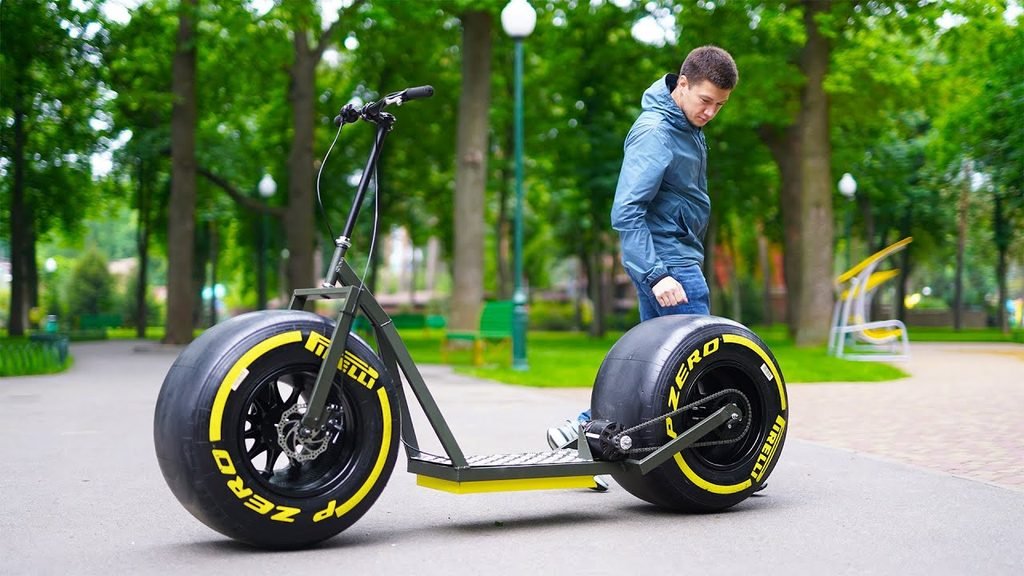
Fat tire Fat Tire Electric Scooter don’t offer a general upgrade. They help with specific issues. They usually work best when it comes to:
- Commuters traveling on cracked, patched, or badly maintained roads.
- More powerful riders that require greater stability, a larger and wider platform
- Trail riders or off-roaders moving between dirt, pavement, and gravel.
- Any rider who regularly rides in muddy, snowy, light, or rainy conditions
- Delivery service riders as well as daily users who travel longer distances, where the comfort increases with time
- Companies and fleet operators require Fat Tire Electric Scooter in order to withstand rougher demand and greater volume of usage without the need for constant maintenance.
If none of the above is the case, a lighter, narrow-tired, smaller-wheeled vehicle could benefit you more because it’s simpler to fold, carry, and store. Additionally, it is more effective on perfect pavement.
How It Works Underneath
Remove the tire, and an Fat Tire Electric Scooter is powered by the same system that powers every other Fat Tire Electric Scooter, comprising A motor (usually located in either or both hubs of the wheel), as well as the lithium-ion battery and a controller to manage power distribution, and also a braking system, usually a mixture of drum, disc, or electronic regenerative brakes.
What’s different is how much effort the tire performs before any other action kicks in. When you ride a model that has a fat tire, it is able to absorb a substantial portion of the impact caused by rough terrain and potholes before suspension (if it is equipped with any suspension is required to do something. This is one reason why fat tire Fat Tire Electric Scooter don’t use suspension completely and have a smooth ride. It’s acting as a primary layer of shock absorption all by itself.
Dual-motor configurations, commonly found in off-road vehicles and models with more power, add the torque of both wheels to aid in getting up hills or to hold the ground on uneven terrain- an important improvement for those who commute on hills or off-road riding, but not something that everyone needs.
Types of Fat Tire Electric Scooters
The fact is that not every Fat Tire Electric Scooter has been designed for the exact purpose. There are a few main variations worth noticing:
- Models for Commuters: 10-inch tires with moderate horsepower and a foldable frame designed to be used on the streets instead of trails.
- All-terrain and off-road models that are wider and have knobby tread tires (often 10.5-11plus inches), generally with two motors, designed for handling dirt, hills, as well as mixed terrain.
- Seated variations consist of an adjustable or fixed seat targeted at long journeys in which standing all the time is exhausting.
- Pneumatic (air-filled) tires provide the highest shock absorption in the class; however, they do require regular check-ups of pressure and are more susceptible to punctures in the absence of additional protection.
- Airless or solid tires are almost puncture-proof and easy to maintain, with the drawback of having a firmer ride.
- Self-healing, tubeless tires with sealants that close small punctures independently, and split the distinction between safety and comfort.
Fat Tire vs. Standard Tire Scooters
| Factor | Fat Tire Scooter | Standard Tire Scooter |
| Tire width | 10–11 inches | ~8–8.5 inches |
| Comfortable riding on rough roads | Strong | Moderate |
| Total weight | Heavier | Lighter |
| Portability | Moderate | High |
| Off-road ability | Good | Poor |
| Performance on smooth surface | A little lower | A little more |
Best fit Difficult terrain, more riders, and wet/mixed conditions A short, comfortable commute. simple storage It’s a factual statement. There is no universally “better.” The one type trades some flexibility and efficacy for comfort and security, and the other is the opposite.
How to Actually Choose One
Instead of beginning with a checklist of items, you should think through your personal situation before you begin.
1 Check out your surface. Mostly smooth city roads point towards a mid-range commuter fat tire. A mixture of gravel, pavement, or dirt suggests an all-terrain model that has a knobbly tread.
2 Find out your daily mileage. Short trips under 10 miles do not require the largest battery. Any longer than 15 miles per day warrants a bigger energy-efficient battery, and typically it is worth the expense.
3 Make sure you are honest about the passenger’s weight as well as the load. Find the Fat Tire Electric Scooter ratings for weight capacity and then check it against your personal weight as well as other things you’re taking with you. Additionally, you should leave an additional Margin instead of going over the limits—a
4 key factor in the climate. Wet or snowy areas benefit from deeper treads and an IP (water/dust resistance) rating. In dry, hot environments, there is greater emphasis on keeping the pneumatic tires in good shape as heat influences the pressure.
5 Make a budget and mix features with it instead of chasing each spec in turn (more details on pricing later).
6 Find out what’s legal in the area you’ll be riding before buying; it’s more crucial than the majority of buying guides acknowledge. It’s a good idea to do it prior to and not just after the purchase.
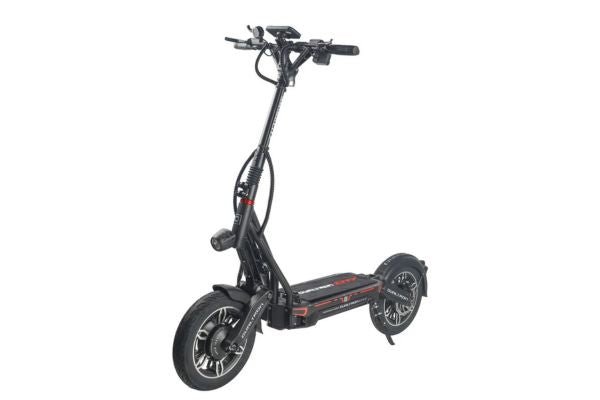
What Fat Tire Electric Scooters Typically Cost
Pricing may vary based on area, product as well as current promotions. Thus, you should treat them as broad bandings, not figures that are set (Source industry-specific price surveys 2024-2025 timeframe)
| Tier | Typical Price Range | What You Get |
| Entry-level | $400–$700 | Single motor, ~20 miles range, simple pneumatics, genuine tires |
| Mid-range | $700–$1,300 | Dual brakes, bigger battery, 25–40 miles range |
| Premium off-road | $1,300+ | Dual motors, longer range, tough tread, app connectivity |
One thing to consider with skepticism is the advertising variety. The manufacturer’s figures are typically calculated under conditions that are close to ideal -that is, flat ground, a more agile rider, and mild weather. The cold, the hills, heavy riders, and stop-and-go riding could reduce the real-world range significantly lower than the figure that is printed on the package. Planning for less real-world distance than the advertised one will avoid getting a rude surprise during the first ride of your life.
The Legal Question Nobody Should Skip
Regulations forFat Tire Electric Scooter whether Fat Tire Electric Scooter or other, are different from country to country, but often it’s according to state, province, or city in the same nation. The legality of riding on an e-bike lane in one location may be restricted to private property in another.
Before purchasing, it’s worth researching your local laws concerning:
- Legal speeds
- Minimum rider age
- Helmet requirements
- When riding is permitted (streets or bike lanes; sidewalks can be different)
- Whether licensing or registration is needed for your particular area
There’s no box you need to examine after purchasing. The purchase of a bike that later turns into a restricted vehicle or even illegal in the area you intend to use it is among the most frequent and unavoidable mistakes made by novice buyers.

Common Mistakes First-Time Buyers Make
Some patterns are seen repeatedly in Fat Tire Electric Scooter forums and complaints:
- Inattention to the tire pressure for pneumatic models that can result in inadequate handling and an increased likelihood of having pinch flats.
- The purchase of top speed on its own and not weighing distance, brake quality, or the overall build weight.
- Believing in advertised ranges on their face instead of preparing for real-world conditions.
- Not taking the trial ride in the event that one is available; stability can be significantly different among models, far more than the spec sheets indicate.
- Not paying attention to local regulations before purchasing, and then having a bike which isn’t legal to use in the manner it was designed to be.
- In the assumption that tires with solid treads are the answer to everything. They cut puncture risk; however, they sacrifice some luxury, which is the main purpose of using a Fat Tire Electric Scooter in the first place.
Keeping One Running Well
The maintenance of a Fat Tire Electric Scooter isn’t too difficult; however, it’s worthwhile to incorporate the following into your routine:
- Monitor tire pressures on pneumatic tires frequently to ensure that they are within the recommended limits of the manufacturer.
- Examine brake pads and cables regularly, particularly after rainy weather cycling.
- Keep the battery between 20 and 20% charged per day for use to ensure long-term longevity of your battery.
- Put the Fat Tire Electric Scooter inside a garage or an enclosed area that is protected from extreme temperatures.
- Check regularly that the stem, deck, as well as the bolts for folding mechanisms are tight, as rough terrain can shake equipment looser than smooth, level pavement.
- A clean tread with no embedded debris following off-road excursions in order to grip the road as well as to spot small punctures earlier.
A Note for Fleet and Business Buyers
If a company is using Fat Tire Electric Scooter in a delivery service, shared-mobility service, or campus transportation program, the calculations shift slightly. The individual’s comfort is still important, and durability is a factor; however, usage, the cost of maintenance per unit, as well as warranties are likely to be of importance much more than the individual user.
Fat tires can be beneficial in the sense that they result in fewer flats (especially when using tubeless or solid choices) and less wear from the constant impact of potholes, as well as greater traction throughout an entire fleet that operates in varying conditions, all of which help reduce the time spent on repairs. However, they come at a cost. price per unit upfront will generally be worth comparing against the expected savings in maintenance before making a big decision.
Alternatives Worth Considering
Fat Tire Electric Scooter may not be the sole option. They’re not suitable for all people:
- StandardFat Tire Electric Scooter with narrow tires are lighter in weight, easier to transport, and much more efficient for smooth, short-distance journeys.
- Electronic bicycles are more suited for longer distances and more hilly routes, using a sitting position which is less strain on your body as it ages.
- Electric skateboards for off-road use are a viable alternative for those who prefer on-road speed over the stability of standing platforms.
- Seated Fat Tire Electric Scooter or mopeds, should be considered for people who are looking for more speed and less physical involvement, if local laws and classifications allow their use.
FAQS
1 Are electric scooters made of fat tires superior to standard electric scooters?
They’re better for safety, comfort, and stability on difficult terrain; however, they’re not necessarily “better” — standard Fat Tire Electric Scooter weigh less and are more efficient when it comes to straight, smooth, or short-distance travel.
2 What is the length of time tire flats remain on an electric scooter?
It depends extensively on the kind of tire being used as well as the driving conditions. The pneumatic tire requires more care in the course of time than tires that are solid. But, the actual lifespan will vary based on the type of tire or location as well as the distance traveled.
3 Do electric Fat Tire Electric Scooter be used off-road?
Yes, particularly ones with twin motors and knobby tread, but the capabilities vary significantly between commuter and off-roaders.
4 Are Fat Tire Electric Scooter allowed for use on public pavements?
That depends entirely upon the laws of your locality and regulations, which vary by cities and countries. Check the local laws before deciding whether it’s possible to make use of pathways.
5 Electronic Fat Tire Electric Scooter need the approval of a permit?
In many places Fat Tire Electric Scooter are not required to have authorization. The regulations are different for each location, and specific zones require registration. Check with your local authority prior to buying.
6 How much does a good Fat Tire Electric Scooter cost?
Reasonable-quality models typically fall between roughly $400 and $2,000+, depending on motor power, battery size, and build quality.
7 Are solid or fat tires superior?
Pneumatic tires generally have more comfort and better shock absorption. Solid tires sacrifice some ease of use for puncture resistance, as well as lower maintenance.
8 Are tires with a larger diameter scooter worth the cost for heavier riders?
Often, yes, because the larger tires and platform generally provide greater balance and stability, but evaluating the model’s weight capacity is more important than the width of the tire by itself.
9 What is the actual range when compared with the figure advertised?
The advertised range is typically measured in near-ideal conditions. The cold, the hills, heavy riders, and frequent stops may significantly decrease real-world distance below the manufacturer’s estimate.
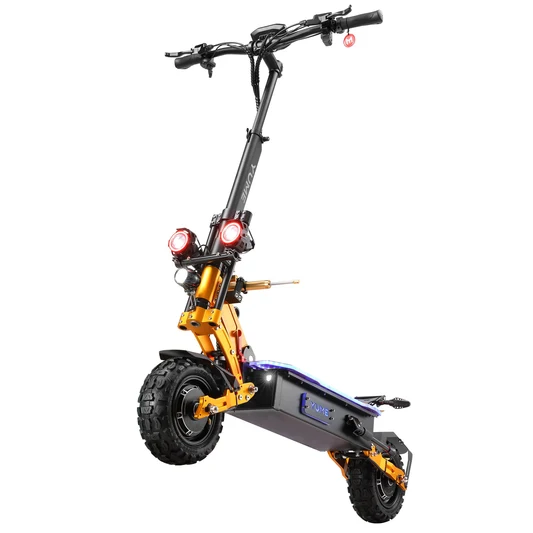
Conclusion
A large-trim Fat Tire Electric Scooter can be a source of more weight and premium in only one particular situation: where safety, comfort, and stability in rough terrain are more important than performance or portability. Making sure that you match the tire type, the motor’s configuration, and battery capacity to the specific terrain, distance, and weather conditions, instead of buying based on speed, is the key to distinguishing the Fat Tire Electric Scooter that are frequently used from one that is destined to end up being thrown away after several disappointments. Whichever you choose, making sure you are aware of local laws before purchasing is the most important step to take before buying, not the last.
These information about electric-scooter-with-seat Screen are gathered from different surveys, medical tests and tech giants like Techradar . Our top priority is to provide you valuable information about floor rising projector screens.
For More Details About Different Projectors Click Here