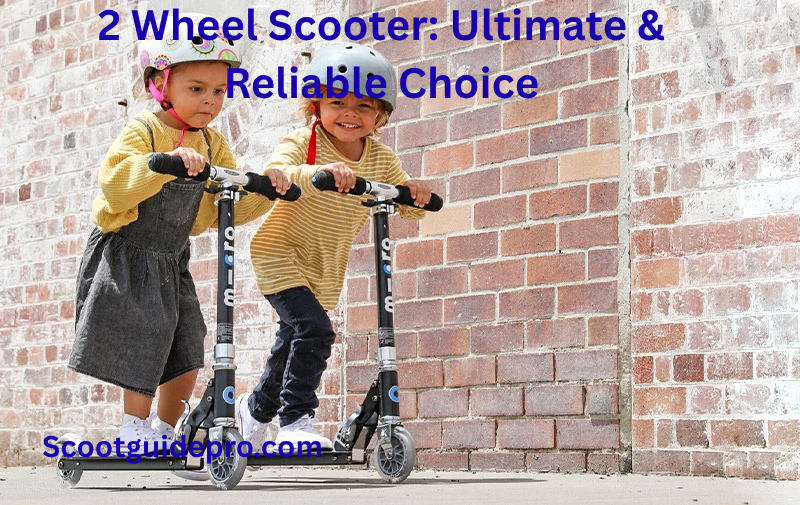
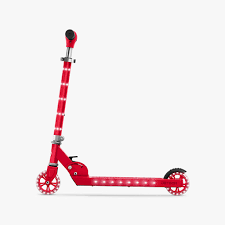
2 Wheel Scooter can be seated, equipped with two wheels aligned with a flat deck, and a steering wheel that is powered by pressing the ground or by the internal motor of the battery. It’s the simplest, inexpensive method to travel shorter distances. However, it’s among the most frequently misunderstood segments in mobility for personal use due to the fact that “scooter” now covers everything from a $20 toy for kids to a $2,000 commuter car.
This is precisely the reason why many people are left with the wrong product. Parents shopping for a child of five and a commuter searching for a battery-powered, last-mile ride share at the same time have completely different needs. This guide breaks it down in detail — the definition of what a 2 Wheel Scooter really is, how different models function, how much they cost, what’s legal, and the best way to choose the best one, without having to guess.
What Exactly Is a 2 Wheel Scooter?
In essence, 2 Wheel Scooter have three components consisting of a deck that you can sit on, a steering column equipped with handlebars, and 2 Wheel Scooter that are arranged from front to back (not in a side-by-side arrangement; this is what differentiates the 2 Wheel Scooter from those with three wheels). A rider is able to balance standing up in a completely different way than riding a bike or standing with no handlebars on the hoverboard.
Two major categories dominate two main markets:
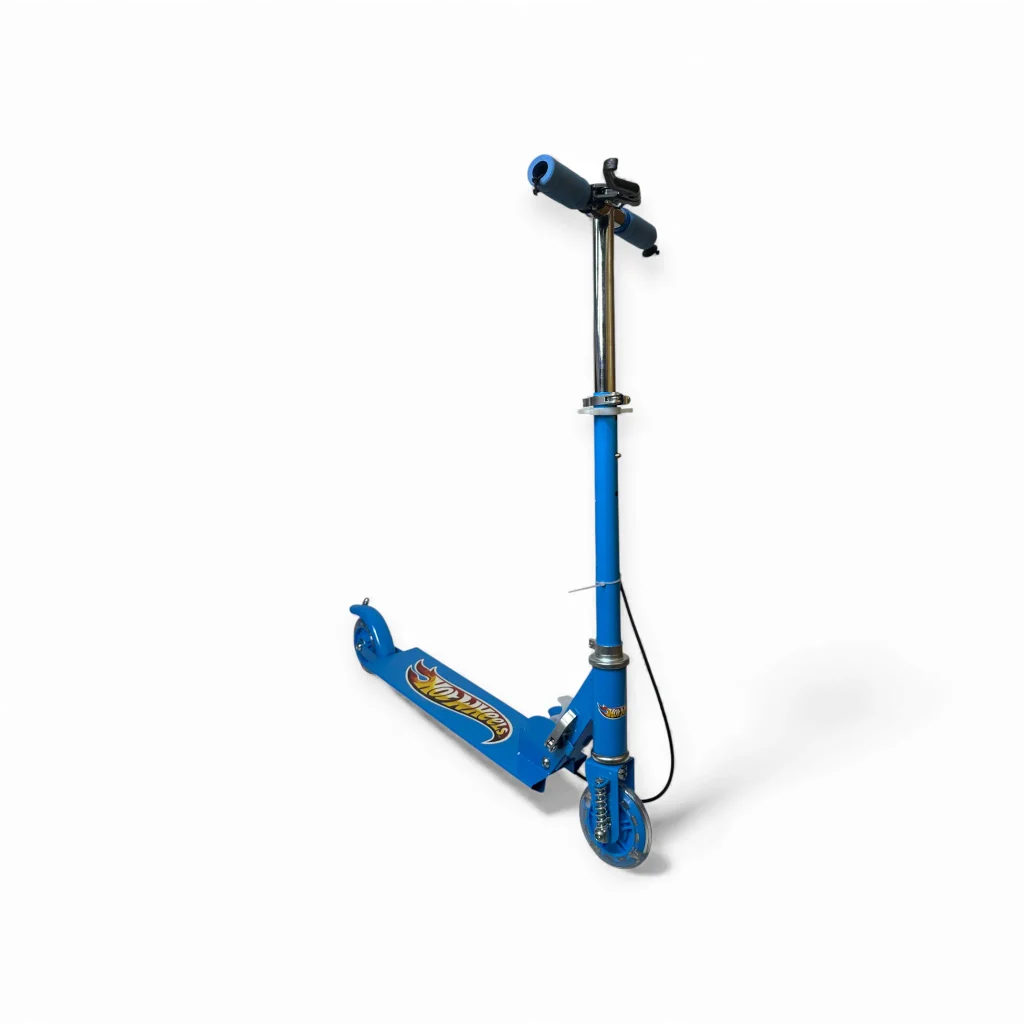
- Kick scooters – manual, foot-powered, no battery
- electronic scooters (e-scooters) – batteryand motor-driven, usually folded
On the basis of everyday searches, 2 Wheel Scooter is used to mean the two. Many people refer to the traditional 2 Wheel Scooter that kids ride through the backyard. Some refer to the 2 Wheel Scooter they’re looking at as a means of getting to train stations. Deciding which you require is the primary choice.
Who Actually Rides These, and Why
The motives behind buying 2 Wheel Scooter differ from what the majority of buying guides will admit:
- Children (roughly five to twelve years old) ride manual 2 Wheel Scooter for entertainment in order to develop balance and coordination.
- Teenagers and students employ them for small walks on campus, as well as to reach the bus stop.
- urban commuters typically opt for 2 Wheel Scooter with folding capabilities that fold in order to take them between office and subway stations.
- Deliveries and gig workers typically choose more powerful electronic versions, as the time and fuel savings can be significant.
- Adults who are fitness-oriented often choose manual 2 Wheel Scooter because they prefer exercise.
- Scooter-share users test the 2 Wheel Scooter-share category, but do not commit to ownership for any time.
If you’re purchasing a 2 Wheel Scooter for somebody else — like a spouse, child, or an employee making sure the2 Wheel Scooter is compatible with the person’s usage needs matters more than selecting the item that appears most appealing in a listing.
How a 2 Wheel Scooter Actually Works
Kick scooters that are manual are extremely simple to operate. One person places their foot on the deck, then pushes away from the ground using one foot, then is able to steer by tilting the handlebar column. This pivots forward on the rear wheel. The majority of 2 Wheel Scooter have a front fender brake, or a hand-operated brake on better models.
Electronic scooters come with rechargeable lithium-ion batteries, a motor (usually the hub motor is mounted in a single wheel), along with an electronic controller. A trigger or thumb throttle regulates the speed of acceleration. Braking is derived from a disc brake or regenerative system, which can pump energy back to the battery. Many electric vehicles come with a variety of speeds — usually standard, eco, and sport- so that new riders are able to start slowly.
Kick Scooter Vs. Electric Scooter: The Actual Decision Framework
The majority of buying guides are lacking in that they provide the spec table, but make it up to you to work out the remainder. The real reason to buy:
| Factor | Kick Scooter | Electric Scooter |
| Initial cost | Low | Higher |
| Ongoing maintenance | Minimal | Moderate (battery, motor) |
| Range | Limited by rider’s stamina | ~10–40 miles per charge, depending on model |
| Legal restrictions | Rare | Many cities regulate speed limits and sidewalk use |
| Best for | Kids, short trips, exercise | Commuters, long distances, hilly roads |
| Typical weight | Light and easy to carry | Heavier |
An easy method to consider this:
Cost aur Maintenance – Kick scooter sasta hai aur maintenance bhi kam lagti hai, jabke 2 Wheel Scooter mehnga hota hai aur battery/motor ki wajah se ongoing maintenance zyada hoti hai.
Range – Kick scooter ki range rider ki stamina pe depend karti hai, jabke 2 Wheel Scooter ek charge mein 10-40 miles tak chal sakta hai (model ke hisaab se).
Legal Restrictions aur Use – Kick scooter par shazi hi koi restriction hota hai (kids, short trips, exercise ke liye best), lekin2 Wheel Scooter par kai cities mein speed limits aur sidewalk rules lagu hote hain (commuting aur long/hilly routes ke liye best).
Weight – Kick scooter halka hota hai aur asaani se carry ho jata hai, jabke 2 Wheel Scooter apni battery/motor ki wajah se zyada bhari hota hai.
What to Actually Look at Before Buying
In addition to “kick vs. electric,” several characteristics make a great 2 Wheel Scooter different from a shaky one.
- Size of deck: Decks with wider widths are ideal for adults and larger shoe dimensions
- Wheel dimensions: Wheel diameter (200mm and above) can roll across cracks and tiny bumps much more easily
- Motor Wattage (electric only): Higher wattage makes it easier.
- Capacity of the battery (Wh) – directly defines the range
- Type of brake: disc brakes work significantly harder than the simple brake on the fender
- Fold Mechanism is crucial in the event that you’re bringing it up on the train or up the stairs every day
- Weight limit for riders: Check this against the actual person riding, not just “average adult”
- Resistant to rain (IP rating) – relevant if you’re planning to ride through moderate rain.
What Does a 2 Wheel Scooter Cost?
The cost of a product varies depending on the region, but these ranges give an accurate view of key marketplaces:
| Category | US Price Range | EU Price Range |
| Kids’ kick scooter | $25–$70 | €25–€65 |
| Adult kick scooter | $50–$150 | €45–€140 |
| Entry-level electric scooter | $250–$450 | €250–€420 |
| Commuter electric scooter | $450–$900 | €400–€850 |
| Performance electric scooter | $900–$2,000+ | €850–€1,900+ |
(Ranges are only indicative and based upon typical market prices; check actual prices with local retail stores, as seasonal demand and the cost of importation change often. )
If you’re trying to find options locally, words such as 2 Wheel Scooter shop near me,” “kick scooter store in [your city],” or “scooter repair near me” will bring up the types of retailers that are most pertinent to your area — micromobility specialty shops as well as general sports goods stores as well as big-box stores, as well as, in several metropolitan cities, 2 Wheel Scooter rental and scooter share operators.
Where the Rules Actually Get Complicated
This is the part most competing guides skip almost entirely, and it’s arguably the most important section for anyone considering an electric model: legality is jurisdiction-specific, and it changes often.
Certain cities limit the speed of 2 Wheel Scooter and limit the areas you are allowed to travel (sidewalk or street vs. the bike lane) and require you to register and obtain insurance for the use of roads. The requirement for helmets for children is widespread in several places; however, adult rules vary and often are advised rather than a requirement. Manual kick scooters don’t fall under this type of rule or any other requirements, and that’s another reason that they’re the most secure choice for young riders.
When you decide to purchase an electric bike, be sure that you consult with your authority responsible for local transportation and be conscious that penalties for not complying scooters have been increasing since municipalities are enforcing stricter rules.
Safety Standards Worth Knowing
Certain certifications and terms frequently appear and are important to be aware of when you compare electric models:
- The UL 2272 – A US safety standard for the electrical systems of personal electronic mobility devices targeted specifically towards reducing risks of battery fire
- CE label – signifies conformity to EU safety regulations.
- IP Rating is a measure of dust and water resistance (higher numbers indicate more sealing)
The scooter should be paired with basic safety gear, including a helmet, ideal wrist and knee pads for beginners and kids. Some guidelines that you should adhere to: do not exceed the weight limit established by the manufacturers of the product Never ride an 2 Wheel Scooter during rainy weather, except when it is specifically designed for doing this, and make sure you test the system’s braking performance before you begin your journey particularly when going downhill.
Common Mistakes Buyers Make
- When you purchase a child’s scooter Don’t purchase one without confirming the age or height guidelines.
- Choosing an electric bike based only on speed and ignoring the distance to braking, as well as build quality
- Doing a trial ride without making sure you are aware of the return policy
- Ignoring local law restrictions until after purchase
- Incorrectly estimating cost for replacement of batteries in smaller electric models.
- Not putting aside money for pad and helmet.
Keeping a Scooter Running Well
Simple maintenance can extend the longevity of any type substantially:
- Verify the condition of wheel bearings every month.
- Check tire pressure to ensure it is appropriate for pneumatic tires.
- Make sure you tighten the bolts on your handlebars and folding joints regularly, as they loosen during regular usage.
- The charge of batteries for electric vehicles should be done in accordance with the instructions of the manufacturer to avoid keeping batteries that are completely depleted over long durations — this is the main (and the easiest to avoid) factors that lead to the early degradation of batteries.
- Make sure to clean your deck regularly to ensure that grip does not wear down in an uneven way.
If a 2 Wheel Scooter Isn’t the Right Fit
There are a few options worthy of consideration based on the riding style:
- Three-wheeled scooters have more stability built-in, especially for infants who don’t yet have the balance on just two wheels.
- Bicycles are more appropriate to cover longer distances as well as higher sustained speed.
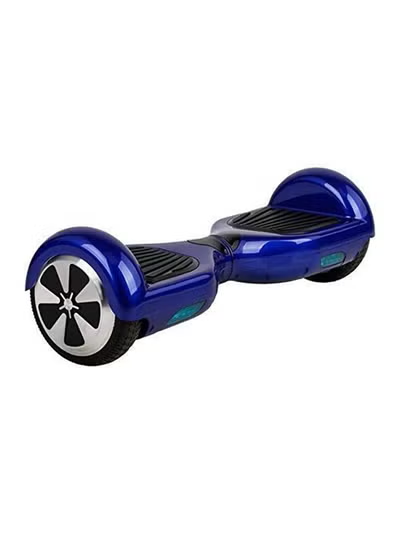
- Hoverboards employ a distinct Balance skill completely and have no bar to balance on.
- Skateboards with electric motors have the same electric drivetrain idea; however, they need an entirely different posture and design.
- Public transportation or walking might be suitable for short, regular trips that don’t require a car. isn’t required.
Getting Started as a New Rider
Children who are learning to ride for the first time and adults can benefit from learning the stability of brakes and stability on an empty, level space prior to navigating through around the city, or through crowds.
If you’re using an electric scooter, you should start with the smallest speed setting and then get familiar with the brakes and throttle prior to moving to the next. Be aware of your surroundings before making turns. Two-wheeled vehicles are much more susceptible to crashes as compared to a bicycle; however, they’re more unstable and less noticeable at slower speeds. This can take newbies off guard.
Commonly asked questions
1 What’s a 2-wheeled scooter?
It’s commonly called an e-scooter for manual use as well as an electric scooter (e-scooter) in the event that it operates with a motor and battery.
2 Are 2-wheelers appropriate for adult riders?
Yes. Adult-specific models feature larger decks, as well as greater capacity to carry weight. Likewise, electric scooters allow the convenience of real-time transportation that a motorbike for kids can’t offer.
3 What’s the optimal age to buy a motorbike with two wheels?
Most manufacturers recommend that you start at around 5-6 years old.This is after the child’s stability has been established. Children younger than this have three wheels at first gradually moving to two wheels as they become older.
4 What speeds will electric scooters on two wheels are able to be able to reach?
Most entry-level models are capable of travelling at a speed of fifteen miles an minute (24 kilometers per hour). Most scooters be driven at 25-30 miles per hour (40-48 km/h).The limit on speed for the area generally is in place regardless of how fast the scooter can be moving.
5 Can you legally use an electric motorbike on urban streets?
The location you’re in is contingent upon the one the area you’re situated within. Some areas prohibit the utilization of electric scooters along streets.However, it’s legal for manual kick scooters. Therefore it’s essential to verify local regulations prior to buying.
6 What is the length of time the battery packs of electric scooters last in use?
Most lithium-ion batteries will last between 300-500 recharge cycles before reducing significantly, in the middle of 3 years of continuous use, depending on the way they’re charged, as well as the amount of storage capacity*.
7 Do scooters equipped with two wheels need the use of helmets?
Many places legally requires helmets for children to use scooters, regardless of what type of vehicle they are riding in. They can be powered by electric or manual. Adult regulations aren’t as consistent in practice, and frequently are merely suggested rather than the requirement.
8 What’s the distinction between a three-wheeled and two-wheeled model?
A two-wheeled vehicle has an inline wheel, and require the use of balance. This makes it easier to maneuver and more ideal for kids aged over the age of 18 and older adults.The three-wheel model sacrifices mobility for security and stability, making it a great alternative for young children.
Bringing It Together
The best 2-wheeler is really a matter of five factors: who’s on it, the purpose they’re employing it for, as well as the kind of terrain that they’ll be covering and the amount of money available, as well as — in the case of anything electronic whether it is legal in the area they reside. Don’t pay attention to any of them and you’ll end up with a scooter that looks nice in the paper but does not fit the user.
If you’re planning to buy soon, the second step is to check your local regulations for electric scooters, ensure that the scooter is suitable for the intended use, and not the flashiest one you can afford. Also, consider the helmet and pads along with the bike itself in order to compare two models within your budget limit before making a decision. This is a lot safer than simply picking the top of a “best of” list.
These information about electric-scooter-with-seat Screen are gathered from different surveys, medical tests and tech giants like Techradar . Our top priority is to provide you valuable information about floor rising projector screens.
For More Details About Different Projectors Click Here